



How to Prepare Your Home for a Six-Month World Cruise

World Cruise by Design • September 13, 2026

Share this article

A six-month world cruise requires more than packing clothes and checking passports. Your home must remain safe, accessible, and financially organized while you cross time zones, borders, and pharmacy systems.

A practical home preparation world cruise plan reduces the risks of water damage, theft, electrical problems, missed bills, and avoidable emergencies. Start early, assign one trusted person to monitor the property, and confirm every local requirement before departure.

Build a home preparation world cruise checklist

Begin by treating your home as a separate travel project. Write down what needs to happen, who will handle it, and when each task must be complete.

Choose a trusted home contact

Select someone who can visit the property, respond to an alarm, accept important deliveries, and contact service providers. This might be a family member, friend, professional house sitter, or property manager.

Give that person written permission when needed. Some insurers, landlords, utilities, and service companies may require proof that another person can access the property or make decisions during your absence.

Provide:

  • Your travel dates and contact information
  • A spare key or approved access method
  • Utility shutoff locations
  • Insurance and property-management details
  • Emergency contacts for plumbing, heating, electrical, and security services
  • Instructions for pets, plants, mail, and deliveries

Do not rely on one person without a backup. Share access details securely, and tell both contacts what to do if you cannot be reached.

Make the home look occupied

Arrange mail collection, package handling, lawn care, snow removal, and other visible maintenance before you leave. A full mailbox, piled deliveries, or an overgrown yard can make an empty home obvious.

Ask your contact to check for unusual odors, water stains, broken windows, tripped breakers, and signs of forced entry. They should visit according to your insurance policy and local requirements, if those rules apply.

Keep travel details private. Avoid posting your exact departure dates publicly, and remove identifying information from documents visible through windows or doors.

Prevent water damage before departure

Water damage can continue for days before anyone notices it. A small leak under a sink, washing machine, water heater, or toilet can become a major problem during a long absence.

Inspect pipes, appliances, and drains

Walk through the property with a flashlight. Check supply lines, shutoff valves, ceilings below bathrooms, basement walls, and areas around appliances.

Look for:

  • Dampness, stains, corrosion, or musty odors
  • Dripping faucets and running toilets
  • Cracked hoses on washing machines and dishwashers
  • Leaks around water heaters and HVAC equipment
  • Blocked gutters or downspouts
  • Slow drains and standing water

Replace worn hoses or arrange repairs before you leave. Clean gutters if they direct water toward the foundation, and make sure exterior drainage moves water away from the home.

Ask a qualified professional whether shutting off the main water supply is appropriate for your property. Some homes require water for heating, fire protection, irrigation, or other systems. Follow the instructions from your plumber, insurer, landlord, or building manager.

Prepare for temperature and weather risks

Set heating or cooling controls to a safe setting for the season. Extreme settings can increase utility costs, stress equipment, or allow pipes to freeze. The right setting depends on your climate, construction, plumbing, and insurance terms.

If you live in a region with freezing temperatures, ask a professional about pipe protection, water shutoff procedures, and whether the heating system must remain active. In hot climates, consider humidity, mold, and air-conditioning requirements.

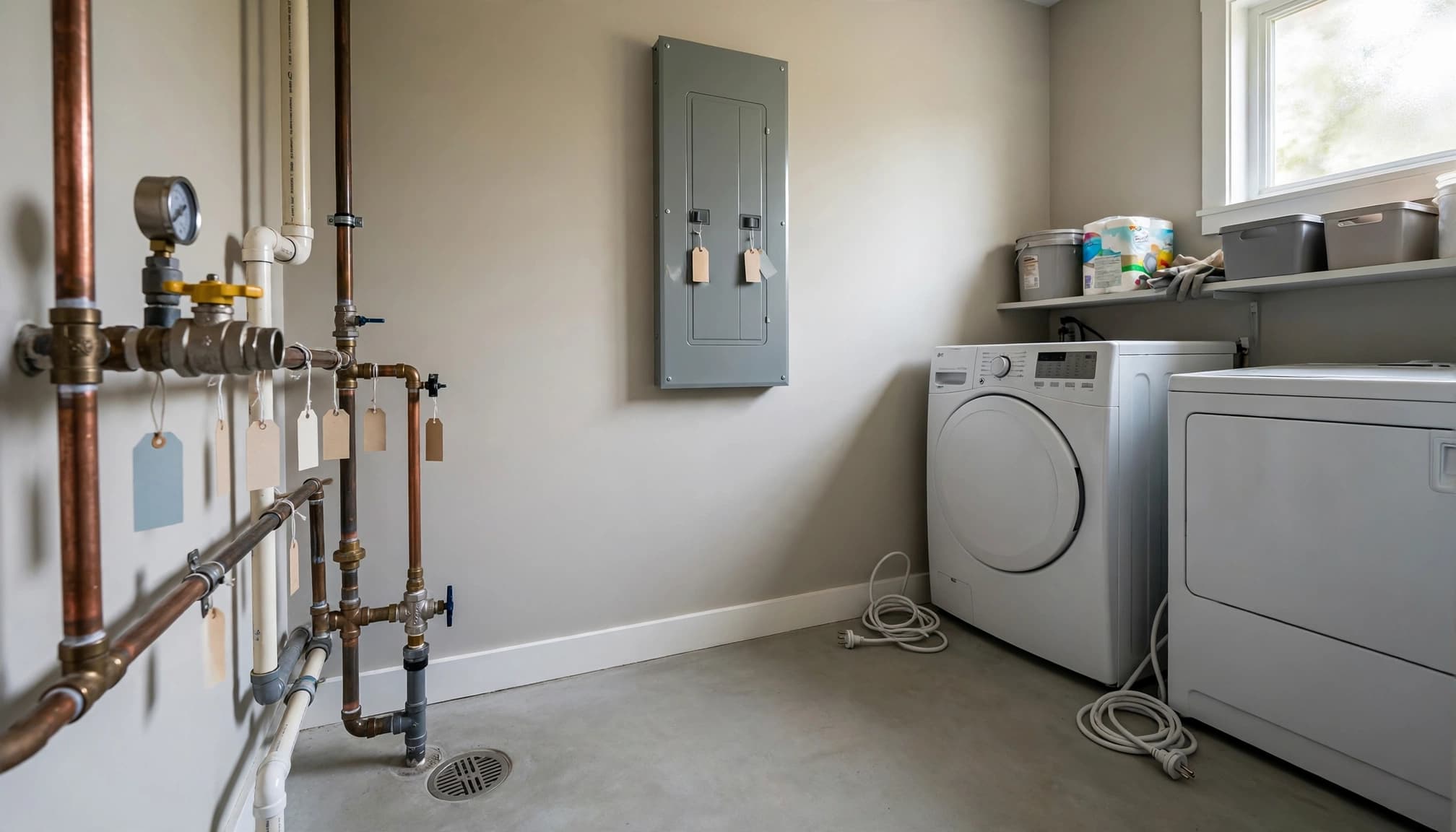
Make sure your home contact knows where the main water valve is located. Have them test the valve only if a qualified person has confirmed that doing so is safe.

A water shutoff plan is useful only when the person handling an emergency can find the valve and knows when to use it.

Reduce electrical and security risks

Electrical preparation should focus on removing unnecessary hazards while keeping essential systems active.

Unplug what does not need power

Disconnect small appliances, televisions, chargers, computers, and decorative equipment that will not operate during your absence. Unplugging reduces standby consumption and limits exposure to electrical surges.

Do not switch off circuits without knowing what they control. A breaker may supply a refrigerator, sump pump, alarm system, heating equipment, medical device, or other essential service.

Ask an electrician to inspect questionable wiring, overloaded outlets, flickering lights, damaged cords, or warm electrical panels. Replace batteries in smoke and carbon monoxide alarms, and confirm that your security and monitoring equipment has reliable power.

Your insurer, landlord, or local utility may have specific requirements. Follow those terms instead of applying a universal shutoff rule.

Secure doors, windows, and valuables

Check every exterior door, window, garage entrance, basement access point, and secondary lock. Repair loose frames and replace damaged locks before departure.

Store passports, financial records, jewelry, and other valuables in a secure location. Do not leave spare keys outside or tell casual acquaintances that the property will be empty.

If you use cameras, alarms, smart locks, or leak sensors, test them before leaving. Confirm that notifications reach your home contact and that the devices continue working after an internet or power interruption. A device that sends alerts to only one traveler is not a complete monitoring plan.

Keep bills, insurance, and documents current

Long travel can make routine administration easy to overlook. Build a financial system that continues working without daily attention.

Automate payments, then verify them

List every recurring expense, including mortgage or rent, utilities, insurance, taxes, subscriptions, loan payments, storage, and pet care. Set up automatic payments only through accounts with enough funds and reliable access.

Before leaving:

  • Check payment dates and account balances
  • Update expired cards and billing addresses
  • Cancel subscriptions you will not use
  • Confirm that automatic transfers will continue
  • Give a trusted person limited account access if appropriate
  • Save confirmation numbers and support contacts

Notify your bank about extended international travel. Keep a backup payment method available, but store it securely rather than leaving sensitive details in an obvious place.

Insurance, lease, utility, tax, and legal requirements vary by location. Confirm whether your policy requires regular property checks, notification of a long vacancy, working alarms, winter heating, or other precautions. Renters should also review lease rules before leaving.

Store records in more than one place

Create a secure digital folder and a physical folder for essential records. Include policy numbers, lease or mortgage details, utility accounts, emergency contacts, appliance warranties, maintenance information, and instructions for your home contact.

Keep offline copies because internet access may be limited during a long voyage. Protect digital files with strong passwords and appropriate account security. Do not leave full financial credentials in an unsecured folder.

Include medical information and prescription details in your travel documents. A long voyage can cross many pharmacy systems, and insurers or destination authorities may have different rules. Confirm refills and restrictions with your clinician, insurer, pharmacy, cruise provider, and relevant authorities well before departure.

Arrange pets, plants, mail, and access

Your home plan must cover the living things and daily services that cannot wait six months.

Put pet care in writing

Confirm whether pets will stay with a caregiver, boarding service, or house sitter. Written instructions should cover feeding, medication, exercise, veterinary care, allergies, emergency decisions, and payment arrangements.

Give the caregiver current veterinary information and a signed authorization if the clinic requires one. Check local rules, boarding policies, insurance terms, and any vaccination requirements well in advance.

If you have plants, arrange watering and light conditions according to each plant's needs. Avoid asking a helper to manage too many unrelated tasks without a clear schedule.

Control keys and deliveries

Create a small access list. Record who has keys, garage codes, alarm codes, or smart-lock access, and remove access that is no longer needed.

Pause deliveries that cannot be collected. Redirect mail or arrange secure collection based on your postal service's options. Ask your contact to inspect packages rather than leaving them outside.

Keep emergency instructions simple. A one-page sheet should explain who to call first, where the shutoffs are, what systems must remain on, and when to contact you. Include a backup contact if you are unreachable.

Follow a six-month departure timeline

Starting early gives you time to repair problems, compare service options, and resolve provider requirements.

Time before departure Home preparation tasks
Six months Review insurance, lease, utilities, pets, subscriptions, and property-monitoring needs. Choose a trusted contact.
Three months Schedule repairs, arrange pet care, confirm mail handling, and organize documents. Review medication supply and refill rules.
Two months Test alarms, locks, leak sensors, backup access, and communication with your home contact.
One month Confirm automatic payments, pause services, complete maintenance, and check that records are available offline.
Final week Photograph the property, inspect for leaks, secure valuables, remove perishables, and test the final access plan.
Departure day Lock all doors and windows, confirm utilities and appliances, take meter readings if useful, and send your contact the final schedule.

Walk through the home with your contact before departure. Show them the water valve, electrical panel, heating controls, alarm system, fire extinguishers, and any equipment that must remain active.

Key Takeaways

A successful home preparation world cruise plan depends on early decisions and clear ownership.

  • Assign a trusted primary contact and a backup.
  • Confirm local insurance, lease, utility, pet, and legal requirements.
  • Inspect for leaks before considering any water shutoff.
  • Unplug unnecessary devices, but keep essential systems powered.
  • Automate bills and check every payment before departure.
  • Store instructions and emergency contacts both securely online and offline.
  • Test access, alarms, notifications, and communication before leaving.
  • Keep travel and vacancy details private.

The goal is not to make every home identical. It is to create a plan that fits your property, location, policy terms, and household responsibilities.

FAQ about preparing your home for a world cruise

Should I shut off my home's water for six months?

Not automatically. Shutting off water can reduce the risk of certain leaks, but it may affect heating, fire protection, irrigation, appliances, or building systems. Ask a qualified plumber and confirm the decision with your insurer, landlord, or property manager.

Should I turn off the electricity?

Only disconnect circuits and appliances that do not need power. Refrigerators, alarms, sump pumps, heating systems, medical equipment, and leak monitors may need electricity. Ask an electrician if you are unsure what a breaker controls.

How often should someone check my home?

Follow your insurance policy, lease, building rules, and local requirements. Even when no specific schedule applies, arrange regular checks that cover water, temperature, security, mail, and visible maintenance. Your home contact should know how to report a problem quickly.

What should I do if I rent my home?

Review your lease before making changes or leaving for an extended period. You may need to notify the landlord, provide emergency contact details, arrange inspections, or follow rules about subletting, pets, utilities, and security devices.

Final Thoughts

A six-month world cruise becomes easier to enjoy when your home has a clear plan behind it. Start with water, power, security, payments, and access, then confirm the details that depend on your location and providers.

If you are still planning the voyage, you can Schedule a Consultation or Subscribe to Our YouTube Channel for more world cruise planning guidance. The best preparation leaves you with fewer decisions to make once you are at sea.

Recent Posts

By World Cruise by Design September 12, 2026
Choosing between a small vs large ship affects nearly every part of a world cruise, not only the number of passengers onboard. Your ship becomes your hotel, dining room, transport, social setting, and daily routine for weeks or months. A large vessel may offer more restaurants...

By World Cruise by Design September 11, 2026
A six-month voyage can feel freeing, but the lack of ordinary structure can wear on you after the first few weeks. A sustainable daily routine at sea gives your days shape without turning a world cruise into a job. The goal isn't to fill every hour with activities or see every...
By World Cruise by Design September 10, 2026
A missed wake-up call can cost you a long-planned day ashore. On a voyage that circles the globe, cruise time zones affect breakfast, tours, dining reservations, medication routines, and contact with home. The good news is that a six-month world cruise gives you time to build...

By World Cruise by Design September 9, 2026
Book a 2027 world cruise as early as possible, ideally when your preferred itinerary opens for sale. Full-voyage reservations and sought-after cabin categories have limited inventory, so waiting can mean fewer choices in location, size, and fare type. Flexible travelers may st...

By World Cruise by Design September 8, 2026
A world cruise can last months, cross dozens of borders, and turn dining into part of your daily routine. For travelers managing cruise food allergies , that makes preparation more important than on a short sailing. The right ship and dining team can reduce risk, but no cruise...

By World Cruise by Design September 7, 2026
A missed ship can turn a wonderful port day into an expensive and stressful problem. That is why the choice between ship excursions versus independent tours deserves more thought on a world cruise than it might on a short sailing. Cruise excursions booked through the ship offe...

By World Cruise by Design September 6, 2026
A daily charge that looks modest can become a four-figure expense on a 120-night sailing. World cruise gratuities deserve the same attention as airfare, insurance, and shore excursions before you pay a deposit. The confusing part is that cruise lines use different names for th...

By World Cruise by Design September 5, 2026
A world cruise can give you months of remarkable places, but its direction changes how the journey feels day to day. The choice between eastbound westbound cruises affects your clock, seasonal weather, flight plans, and the order in which major regions appear. Neither directio...

By World Cruise by Design September 4, 2026
A missed flight can turn the first days of a world cruise airfare plan into an expensive scramble. Because these voyages often begin far from home and may sail for months, the cheapest ticket isn't always the lowest-risk choice. Cruise-line air packages and self-booked flights...

By World Cruise by Design September 3, 2026
A world cruise can circle the globe, yet your booking doesn't have to cover every mile. The right choice depends on your available time, budget, travel style, and the ports that matter most to you. A full voyage booking gives you the complete itinerary on one ship, while a seg...

Show More