


Choose the Right World Cruise Embarkation Port
The first day of a long voyage can feel effortless or exhausting, and much of that comes down to where you begin. A world cruise embarkation port shapes your flights, hotel plans, baggage transfers, document checks, and even how rested you feel when you step aboard.
There is no single right answer for every traveler. A port that works beautifully for a Sydney-based guest may add unnecessary connections for someone flying from Europe or North America.
Choose the departure city with the same care you give the itinerary itself.
How to Choose a World Cruise Embarkation Port
Start by ranking the factors that matter most to you. Convenience has different meanings for different travelers. A non-stop flight may matter more than a famous pre-cruise city, while another guest may happily spend extra for two nights in Barcelona or Singapore.
Match the port to your itinerary's shape
A roundtrip sailing usually makes airfare simpler because you fly in and out of the same city. However, a world cruise that begins in one port and ends in another can offer a more efficient route, especially if it avoids repeating long ocean crossings.
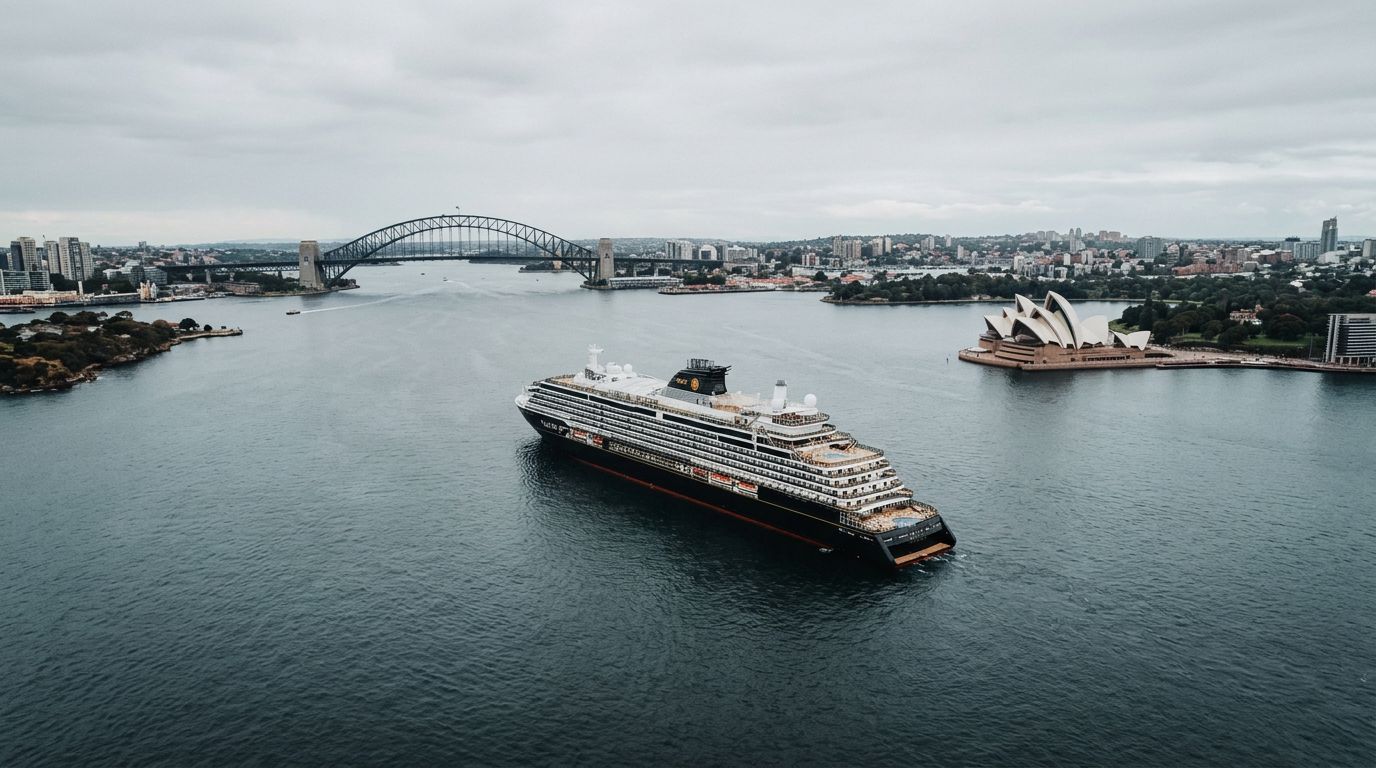
Sydney remains a major choice for roundtrip global itineraries. For example, Crown Princess scheduled a 114-day world cruise roundtrip from Sydney in 2026. Southampton, Miami, Fort Lauderdale, Barcelona, Singapore, and Civitavecchia also appear regularly in long-voyage and sector-cruise routing.
Check whether you are booking the full sailing or a segment. A sector that begins in Athens may have very different airfare and visa needs than the complete itinerary.
Put your own comfort first
Your ideal departure point should fit your physical needs and travel habits. Consider how you handle overnight flights, time-zone changes, mobility, prescription medication, and several pieces of luggage.
Before comparing fares, write down your personal priorities:
- Favor the fewest flight connections if delayed luggage would cause real stress.
- Choose a city with a comfortable pre-cruise hotel selection if you want time to recover.
- Consider direct rail access when departing from European ports such as Southampton.
- Allow extra flexibility if you travel during storm-prone or holiday-heavy periods.
The lowest airfare can become expensive if it creates a rushed arrival or requires an awkward overnight transfer.
The Terminal Matters as Much as the Destination City
Cruise marketing often uses the nearest famous city, but the terminal may be some distance away. That difference affects hotel selection, transfer time, and what you can do on departure morning.
Know the actual ship location
Rome is the clearest example. Your itinerary may say "Rome," but ships generally use Civitavecchia, a separate port city on the Tyrrhenian coast. Staying beside the Pantheon gives you a wonderful city break, yet it does not place you beside the pier.
Athens works the same way. The cruise terminal is in Piraeus, not central Athens. Barcelona's terminals sit much closer to the city center, while Southampton's docks are part of the city's waterfront.
Confirm the ship's terminal, not only the city named on your confirmation. Large ports can assign different berths, and terminal instructions can change before sailing.
A great pre-cruise city does not automatically make a convenient cruise terminal. Price the hotel-to-pier journey before choosing where to stay.
Plan the last mile with your bags
Ask your hotel whether it can arrange a car suitable for your luggage. A compact sedan may not work for two travelers carrying formalwear, medical supplies, and several weeks of cruise clothing.
Also, check the cruise line's specified arrival window. Arriving far too early may leave you waiting outside the terminal, while arriving late can create a painful start to a trip that lasts months.
Compare Major World Cruise Departure Gateways
The best world cruise embarkation port often depends on where you live and where the ship heads first. These leading gateways offer different strengths.
South Florida: Miami and Fort Lauderdale
Miami gives travelers a huge choice of flights, hotels, restaurants, and cruise lines. Its terminals are in downtown Miami, which makes a pre-cruise stay appealing if you want city energy before boarding. Still, Miami's cruise port is roughly 25.7 miles from Fort Lauderdale-Hollywood International Airport, so airport choice can affect transfer time and cost.
Port Everglades in Fort Lauderdale is a strong alternative, especially for travelers flying into FLL. Viking has used Fort Lauderdale as a pre-cruise hotel gateway for its 2026 world cruise planning. South Florida is busy through September, but late summer also falls within the Atlantic hurricane season. Build in extra time and use flexible air arrangements.
European gateways: Southampton, Barcelona, and Civitavecchia
Southampton is practical for UK residents and travelers linking a cruise with London by rail. Cunard's Queen Mary 2 has continued to connect long ocean sectors involving Southampton, Cape Town, Le Havre, and New York.
Barcelona suits travelers who want a compact, walkable pre-cruise city near the waterfront. Civitavecchia works better for those who prefer a quieter port-area hotel before boarding, although many guests still choose several nights in Rome.
Piraeus is a smart choice when the route focuses on Greece, the eastern Mediterranean, or a longer passage toward the Suez region and Asia.
Singapore, Sydney, Los Angeles, and New York
Singapore is efficient for Asia-focused routes and provides a logical stop between Europe, Southeast Asia, and Australia. Sydney offers an appealing starting point for travelers who want Australia or the South Pacific early in the voyage.
Los Angeles and New York can suit repositioning routes or transoceanic sectors. They are worth considering when flight schedules work in your favor, but compare airport-to-port transfers and local hotel costs before committing.
Arrive Early and Give Yourself Room for Delays
A world cruise is not the moment to land a few hours before check-in. International flights can be late, bags can miss a connection, and a minor passport question can take longer than expected.
Stay at least one night before boarding
For most international departures, arriving two or three nights early is more comfortable than arriving the day before. That buffer gives you time to adjust to the clock, replace forgotten items, and recover if a flight changes.
Add more time when the port requires a lengthy transfer. Rome to Civitavecchia, a cross-region airport transfer in South Florida, or travel during a major holiday can justify another night.
A nearby hotel also makes departure morning calmer. You can eat breakfast, finish packing, and leave for the terminal without watching the clock.
Protect the first day from flight problems
Book flights that arrive early enough to absorb a missed connection. When possible, avoid the final flight of the day into your departure city.
Keep medications, glasses, travel documents, a change of clothes, and a small set of cruise essentials in your carry-on. Checked bags sometimes arrive later than you do. For a voyage of this length, that inconvenience is manageable, but only if you have the basics with you.
Check Travel Documents Before You Book Flights
A long sailing may visit dozens of countries, and entry rules depend on your nationality, passport, and route. Do not assume that a visa-free airport transit means you can enter a cruise destination without further paperwork.
Review the complete itinerary, not the first port
Request the day-by-day route and identify every country where you may go ashore. Pay attention to overnight calls and ports that require a tender, because the cruise line may set different document rules for those days.
Many governments require a passport with several months of validity after travel. Some countries require visas arranged before departure, while others may require an online authorization or proof of onward travel.
Your cruise line can provide current guest guidance, but you remain responsible for meeting each destination's entry requirements. Check official government guidance for your nationality before paying for non-refundable flights or hotels.
Keep records accessible but secure
Carry printed and digital copies of your passport details, travel insurance, visa approvals, itinerary, and emergency contacts. Store copies separately from the originals.
If you use a surname that differs across documents, resolve that issue before ticketing. Airlines, cruise lines, and border officials need names to match exactly.
Compare the Full Cost, Not the Flight Price
Airfare is only one line in the budget. A less expensive ticket can lose its advantage after adding transfers, hotel nights, baggage fees, meals, and a last-minute airport change.
For each world cruise embarkation port you are considering, price the same package: flights, two or three hotel nights, airport transfer, hotel-to-terminal transfer, and a reasonable allowance for meals. Then compare the totals.
Also consider the trip home. A low-cost outbound flight matters less if the cruise ends at a port with difficult or expensive long-haul connections. Open-jaw airfare can be worthwhile when it saves you a difficult backtrack across a continent.
Travel insurance deserves attention here as well. Read the policy's missed-connection and trip-interruption terms, particularly if you book air independently from the cruise line.
Confirm Every Detail Before Final Payment
Port assignments, boarding times, visa rules, airline schedules, and even itinerary calls can change. Verify current instructions directly with the cruise line shortly before you make final travel arrangements, then review them again before departure.
Keep your decision focused on practical details:
- Confirm the terminal address, check-in window, and luggage-handling process.
- Ask whether the line offers a transfer or pre-cruise hotel package that fits your plans.
- Check flight arrival times against the cruise line's boarding deadline.
- Reconfirm passport validity, visas, health requirements, and transit rules for every country on the route.
If two ports look equally workable, personal planning support can settle the choice. Schedule a Consultation to discuss flight timing, pre-cruise stays, and the departure city that best fits your sailing. You can also Subscribe to Our YouTube Channel for more guidance on planning a long voyage.
Final Thoughts on Choosing Your Departure Port
The right port gives you breathing room before the ship leaves. It matches the route, reduces difficult transfers, fits your budget, and gives you time to arrive rested.
A world cruise embarkation port is more than a dot on an itinerary. Choose it with your flights, terminal location, documents, and pre-cruise days in view, and your voyage can begin with calm rather than a scramble.
Recent Posts