Middle East Ports: Dubai, Muscat, and Aqaba Compared
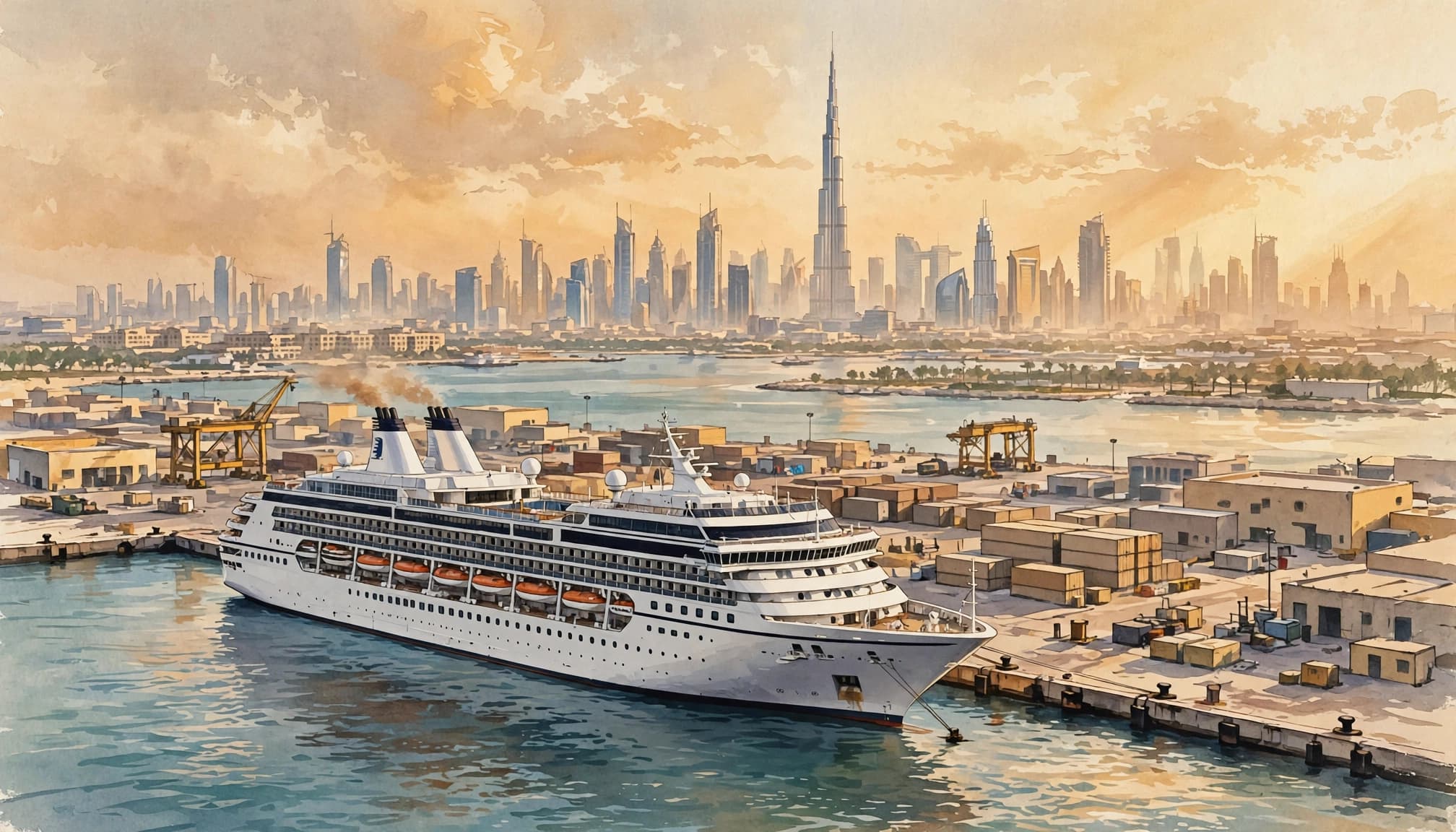
Three stops in the same region can produce three very different days ashore. Dubai offers urban spectacle, Muscat brings you closer to Omani harbor life, and Aqaba opens the way to Petra and the Red Sea.
For travelers considering a world cruise, these Middle East ports reward different priorities and different levels of energy. The strongest itinerary gives you usable shore time , especially when the main attraction requires a long drive.
Start with the experience you want, then consider how each port's schedule supports it.
Three Ports, Three Different Experiences
Dubai suits travelers who enjoy architecture, shopping, museums, and polished urban experiences. Muscat offers a more intimate introduction through its waterfront, souq, and mountain-framed neighborhoods. Aqaba presents the biggest choice between staying near the coast and committing to an inland excursion.
These differences matter when comparing two otherwise similar voyages.
| Port | Main appeal | Shore-day consideration |
|---|---|---|
| Dubai | Contemporary skyline and Emirati heritage | Choose a focused itinerary rather than crossing the city repeatedly. |
| Muscat | Mutrah waterfront, souq, and Omani culture | Separate nearby harbor exploration from sights requiring a car. |
| Aqaba | Petra, desert landscapes, and the Red Sea | Inland excursions can involve substantial travel and walking. |
The most useful comparison is time at your destination , after transport and ship procedures.
Our guidance on comparing usable shore time explains why an overnight call and a late departure can offer different opportunities. Across these three ports, that distinction can change the entire character of your visit.
Dubai: Choose Between Heritage and Urban Spectacle
Dubai's appeal is its contrast. You can spend the morning exploring its trading history, then encounter the modern city's scale later that day. However, a short call works better with one geographic focus.
Explore the trading city around Dubai Creek
Al Shindagha Museum introduces the communities, maritime traditions, and commerce behind Dubai's growth. Its waterfront setting gives the exhibits a useful connection to the city outside.
The museum's published hours are 10 a.m. to 8 p.m. daily. That makes it a practical cultural anchor for a daytime visit without needing an early opening.
Nearby heritage districts and markets offer a different atmosphere from the skyline. Grand Souk in Bur Dubai focuses on textiles and other goods, while Dubai Gold Souk offers an extensive jewelry-shopping experience. For travelers who prefer history to retail, give the museum more time rather than fitting several markets into one circuit.
Give contemporary Dubai its own time
Modern Dubai suits travelers who enjoy ambitious architecture, upscale shopping, and a leisurely meal in an urban setting. This part of the visit benefits from a deliberate choice of activities.
An overnight stay gives you room to separate heritage sightseeing from an evening in the contemporary city. On a shorter call, combining both can mean too much time in vehicles.
A private car can provide comfortable pacing, especially for guests who want fewer transfers. Still, comfort alone doesn't make an overfilled itinerary enjoyable. Choose one major experience and allow space for lunch, traffic, and the return journey.
Muscat: Harbor Life and Omani Heritage
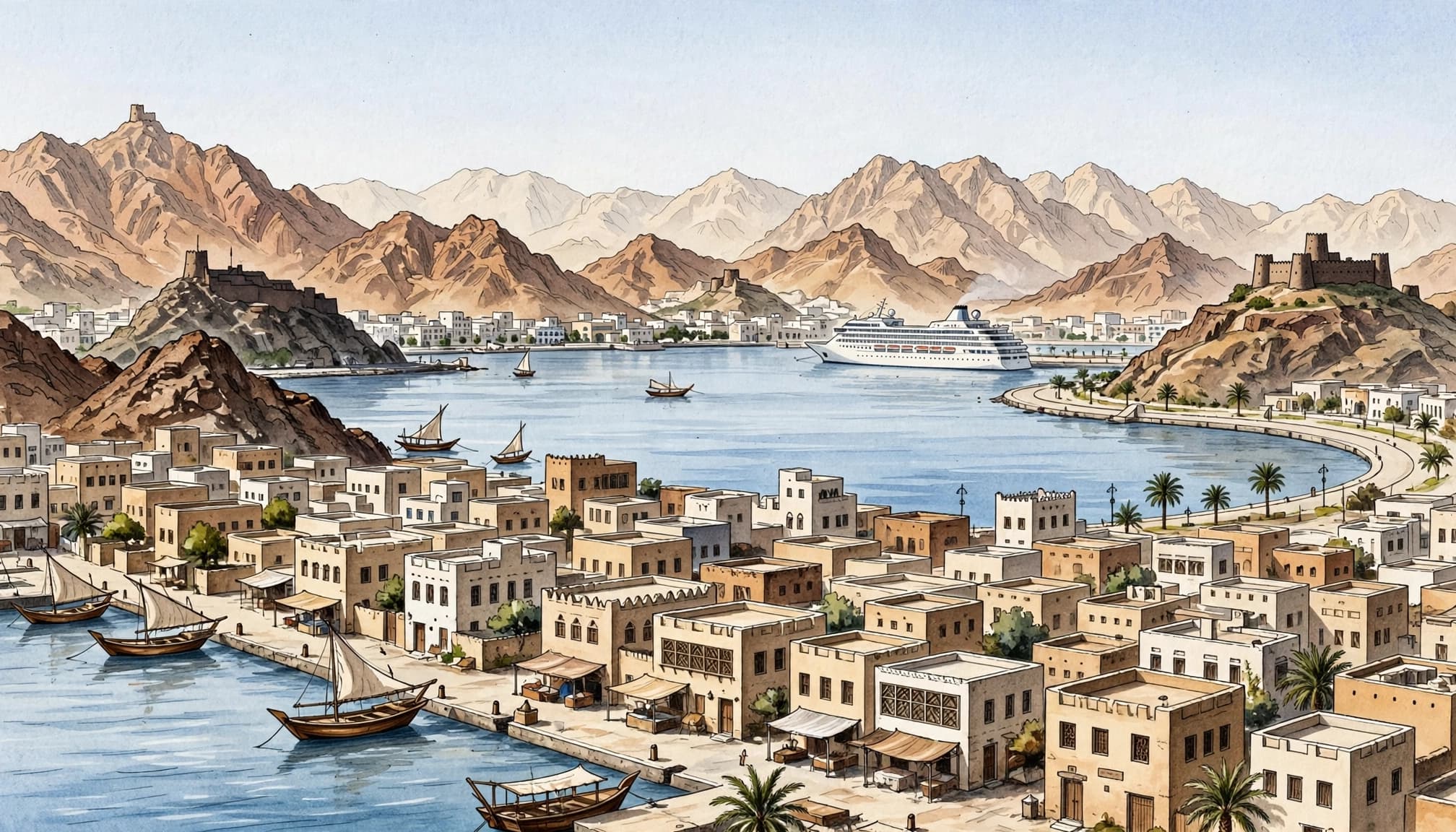
Muscat feels different immediately. Rugged mountains surround the harbor, and the city's low-rise buildings create a gentler visual rhythm than Dubai's towers.
Port Sultan Qaboos in Mutrah is the main cruise gateway. Its location makes the waterfront a natural starting point.
Keep a local day centered on Mutrah
Mutrah Souq and the Corniche are near the port, making this area well suited to an unhurried visit. The souq brings together frankincense, textiles, and souvenirs within covered trading lanes.
A 2026 port guide reports a free shuttle between the berth and port gate, taking roughly three to five minutes. Walking through the working port is restricted, so nearby sightseeing still begins with port transport.
Once outside, combine the waterfront with the souq rather than assuming you need a full-day tour. This is a good option between demanding excursions elsewhere on a long voyage. However, uneven surfaces, crowds, and limited shade can still affect comfort.
Travel farther for major cultural sights
Sultan Qaboos Grand Mosque and Royal Opera House Muscat offer a broader introduction to Oman's religious and cultural life. Port guides estimate drives of approximately 20 to 30 minutes to these sights.
Old Muscat is another option, with a guide estimate of roughly 25 minutes by taxi. These are approximate journeys, not fixed transfers.
A guided outing can connect the districts without making transportation the day's main task. For religious-site visits, modest clothing is essential, and mosque access follows visitor rules. Also, visiting the opera house doesn't imply that a performance fits your port schedule.
Aqaba: Petra, Desert Excursions, or the Coast
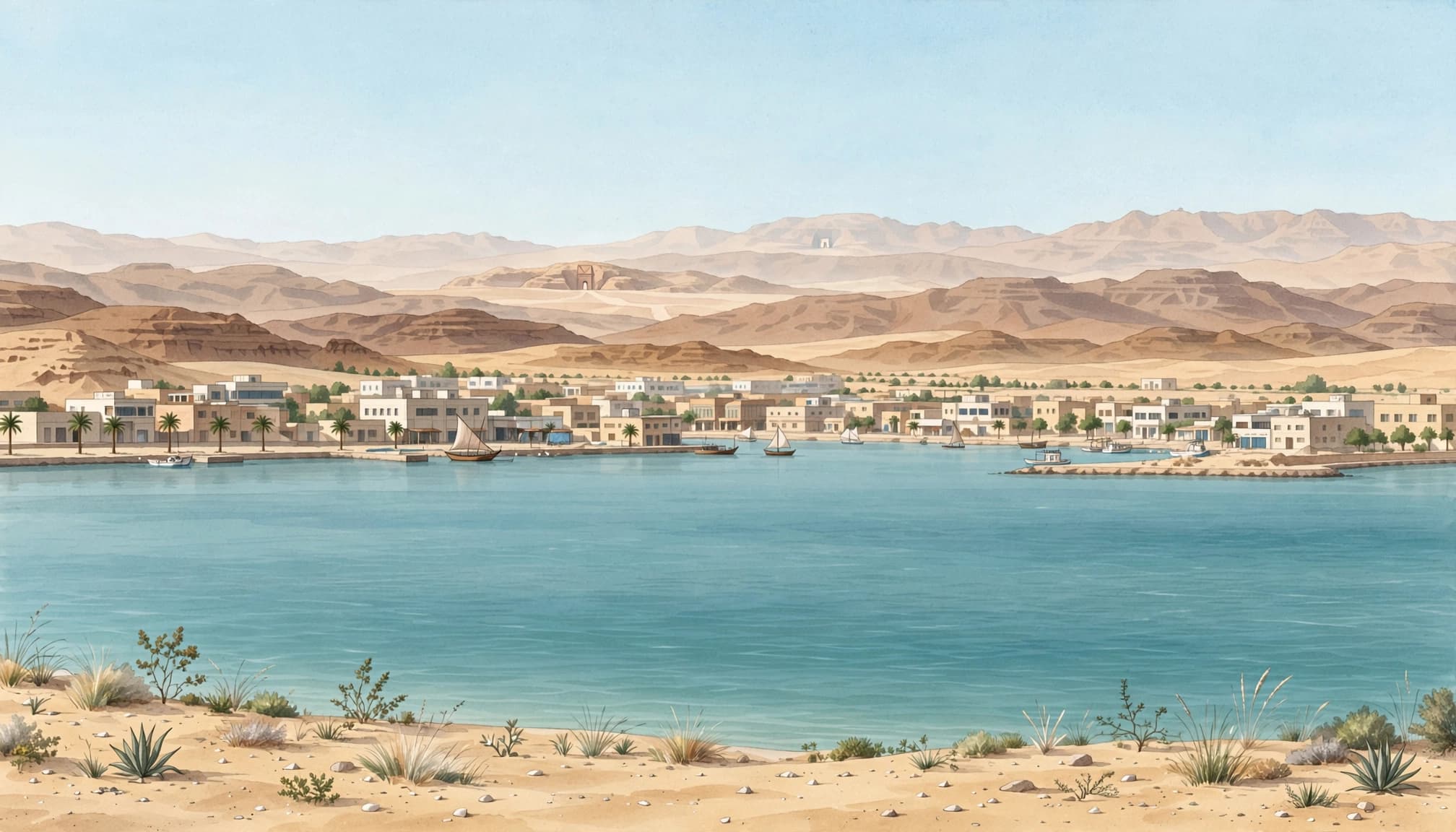
Aqaba is Jordan's Red Sea gateway. Its dedicated cruise terminal, developed with AD Ports Group, began initial operations in early 2023.
The terminal supports passenger arrivals, but Aqaba's most famous excursions lie inland. Your choice here should reflect both the port window and your walking stamina.
Treat Petra as a substantial excursion
Visit Jordan places Aqaba approximately 128 kilometers south of Petra, with a drive of about two hours via the Desert Highway. That estimate describes travel between the destinations, rather than a complete berth-to-entrance journey.
The road travel alone can absorb about four hours of the day. Petra then requires walking through the Siq to reach the Treasury, followed by the return walk. Seeing more of the archaeological site adds distance and exertion.
For many travelers, this is the priority experience. Nevertheless, it deserves a long port call and a realistic activity level. A tour centered on the Treasury and entrance route offers a different experience from a more extensive exploration.
Choose a desert or local alternative
Wadi Rum offers sandstone scenery and desert excursions. It changes the day's focus toward landscapes, although vehicle transfers and rough surfaces can still make it physically demanding.
Staying in Aqaba offers a less intensive alternative. The Ancient Islamic City of Ayla preserves remains of an early Islamic settlement, while the Early Byzantine Period Church adds another layer of local history.
Alternatively, an organized Red Sea outing can focus on swimming or snorkeling. That experience depends on marine conditions and your comfort in the water. Petra, desert touring, and a coastal visit each deserve their own day rather than an ambitious combination.
Match Shore Arrangements to Distance and Stamina
A comfortable port day depends on how the excursion operates, not only what it promises. This matters even more after several weeks of travel.
Use more support for distant excursions
Dubai's urban sightseeing and a local Mutrah visit lend themselves to flexible arrangements. By contrast, Petra involves a long road journey and a tighter relationship between travel time and ship schedules.
Cruise-line excursions coordinate with the ship's operation. Independent tours can offer smaller groups and more control over pace, but you carry more responsibility for the return journey.
Our comparison of ship tours and independent excursions outlines the trade-offs. For a remote, time-sensitive day, operational support may matter more than saving on the excursion price.
Your return deadline is the ship's all-aboard time, which comes before its published departure.
Budget for comfort and recovery
Excursion value includes vehicle comfort, walking distance, group size, and time at the main attraction. A shorter tour can be the better purchase when it preserves your energy.
Likewise, an included excursion has limited value if its activity level doesn't suit you. Private vehicles, entrance tickets, meals, and water activities can add to port-day spending.
Our guide to fare inclusions and extra costs helps separate those expenses. Across a long itinerary, alternate demanding sightseeing with lighter days instead of treating every arrival as a full-day expedition.
Entry Rules and Regional Changes Matter
These destinations belong to three countries with separate immigration systems. A short shore visit doesn't automatically count as visa-exempt transit, and an organized tour doesn't replace required entry permission.
Understand the rules for your passport
For eligible U.S. tourists with regular passports marked M or F, the UAE provides a no-fee visa on arrival for visits of 30 days or less. Canadian tourists may receive a free visa on arrival allowing 90 days within a 180-day period.
Both countries' UAE guidance requires passports valid for six months beyond entry. Canada's Oman guidance also specifies six months beyond entry and describes conditional visa-free tourism stays of up to 14 days for U.S. and Canadian citizens.
Overnight stays, repeat entries, joining by air, and leaving the ship early can affect documentation. Our port-by-port visa planning guide explains these distinctions.
Keep route flexibility in perspective
Regional security can affect port calls and the wider voyage. These stops are possibilities on an itinerary, rather than guaranteed experiences.
As of October 3, 2026, Canada's Oman travel advisory advised against non-essential travel because of regional security concerns. It also identified increased attack risks in the Gulf of Oman and northern Arabian Sea.
That warning matters alongside the destination's appeal. Weather, security decisions, and operational changes can all alter a voyage. Flexible shore bookings reduce financial exposure, while suitable interruption coverage matters if a disruption requires an early return home.
Key Takeaways for These Middle East Ports
- Dubai offers the broadest urban variety, but a focused plan usually creates a better day than repeated cross-city journeys.
- Muscat supports a lighter waterfront visit, with major cultural sights available through separate drives.
- Aqaba offers access to Petra, but inland sightseeing demands more time and energy than staying near the coast.
- Port hours, entry permission, and regional conditions deserve as much attention as the destination names.
For more itinerary discussions, Subscribe to Our YouTube Channel.
Choose the Port Experience That Fits Your Voyage
Dubai, Muscat, and Aqaba offer distinct experiences: urban ambition, harbor culture, and access to Jordan's inland heritage. The best fit depends on what you want to experience and how much comfortable time ashore the sailing provides.
A strong itinerary leaves room to enjoy those differences without making every arrival an endurance test. Port depth matters more than collecting names on a map.
To discuss these calls within your wider voyage, Schedule a Consultation with us.
Recent Posts