Panama and Suez Canal Transits on a World Cruise
A canal crossing can become one of the most memorable days of a long voyage, even though you may never step ashore. Panama Suez Canal transit planning helps you choose the itinerary, cabin, and pace that make those hours feel special rather than exhausting.
Both canals shorten a ship's route between oceans, yet they offer completely different scenery and rhythms. A Panama crossing is defined by locks, rainforest, and rising water. The Suez is a long passage through flat desert terrain, often shaped by convoy timing and regional operating conditions.
The best choice depends on what you want from your world cruise, and how much flexibility you can accept in the itinerary.
A full canal crossing is not a port call
Cruise brochures can make canal days sound alike. Read the itinerary language closely, because "Panama Canal," "Suez Canal," and nearby port names can describe very different experiences.
A full transit means your ship enters one end of the canal and exits at the other. You remain aboard while canal authorities direct the vessel through the waterway. The day is usually a scenic event at sea, with narration, deck viewing, and changing landscapes.
A port call means the ship docks or tenders near the canal zone. You may visit Panama City, Colon, Port Said, or Suez, but your ship may not pass through the canal at all.
Words that signal a real crossing
Look for phrases such as "full transit," "partial transit," "transiting the canal," or a listed passage from one coast to another. Princess Cruises, for example, labels a scheduled Panama passage as "Panama Canal Full Transit-Panamax," clearly separating it from a regional call.
"Canal experience" is less precise. Ask the cruise line whether your ship will complete the crossing, use locks, or only visit a nearby port.
Why the difference matters
A full passage can occupy most of a day, or stretch across two calendar days in the Suez. That affects shore-excursion planning, dining reservations, and how you value your sea days.
A nearby port can still be rewarding. However, it won't deliver the feeling of watching your ship move through a narrow working waterway under canal authority control.
What happens during a Panama Canal full transit
The Panama Canal connects the Atlantic and Pacific through a route of locks, lakes, and excavated channels. A cruise ship crossing it is part transportation, part moving lesson in maritime engineering.
The Panama Canal Authority controls vessel movements through its Maritime Traffic Control Unit and central booking system. Therefore, cruise lines receive operating times, pilot arrangements, and passage instructions that can change with traffic conditions.
The locks are the main event
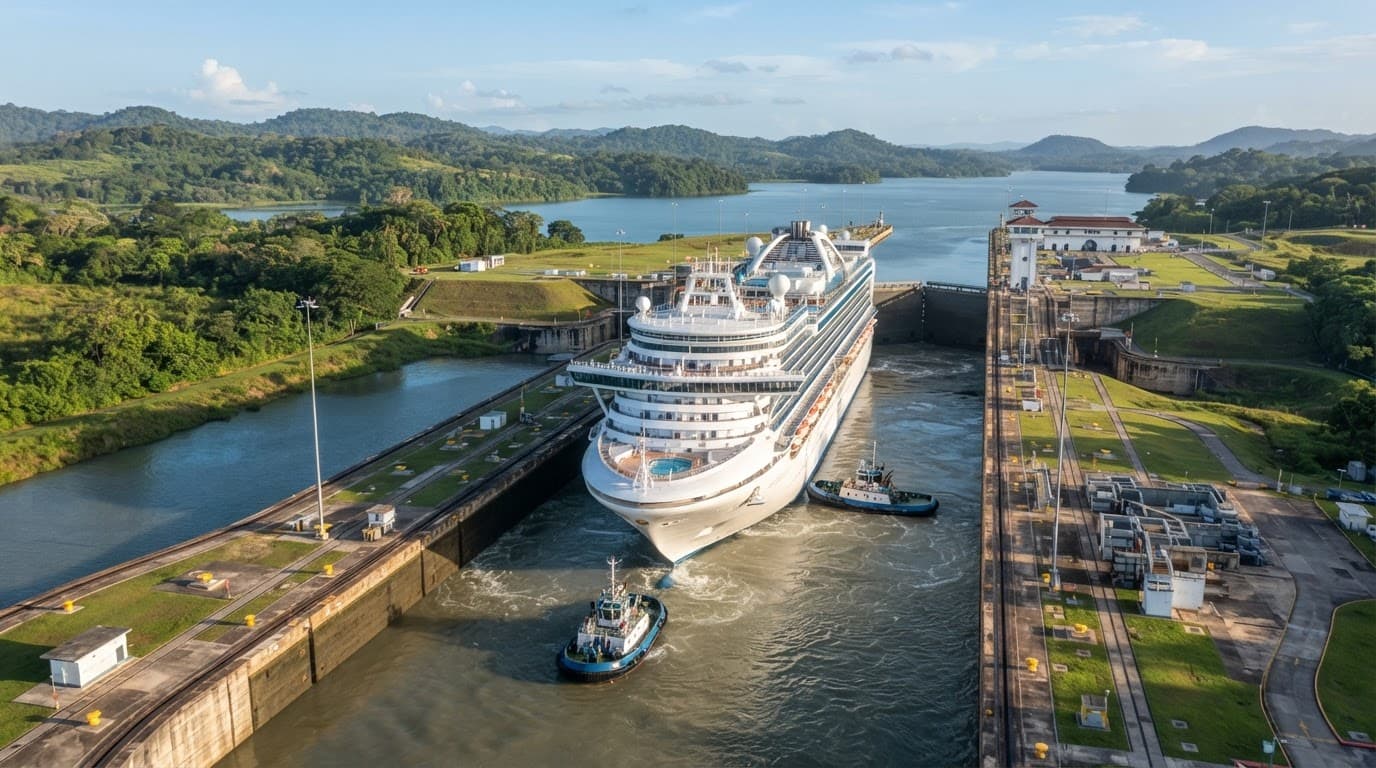
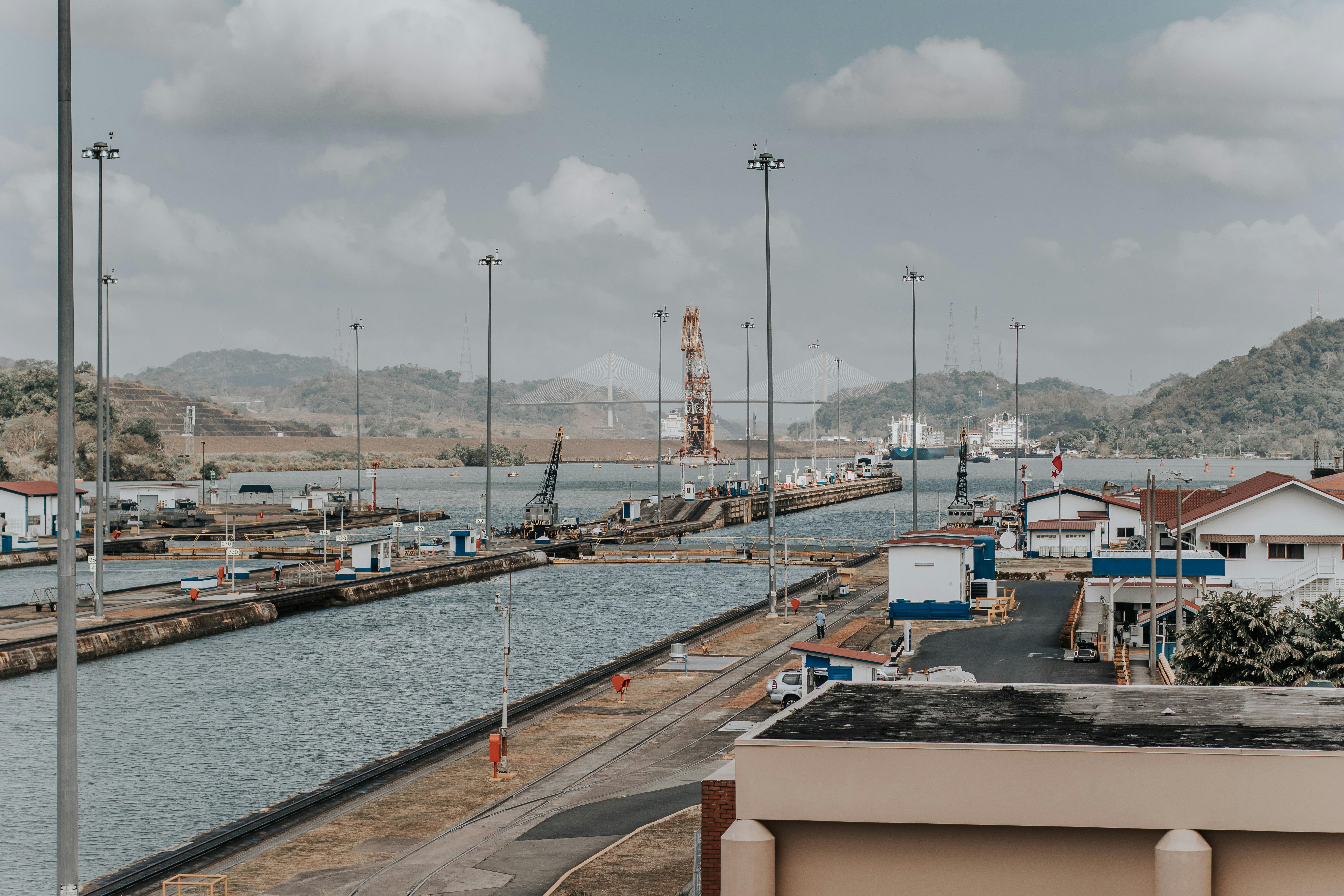
Most guests want to see the lock sequence. Depending on the direction and route, your ship enters chambers, gates close behind it, and water levels rise or fall before the next gate opens.
The ship may pass through the historic locks or the larger Neo-Panamax locks, based on its size and operational plan. The canal authority, not passengers or the cruise line alone, makes the final operational arrangements.
Expect pauses. Ships line up, pilots board, and traffic clears ahead. Those slower moments are part of a working canal, not a sign that something has gone wrong.
Gatun Lake changes the view
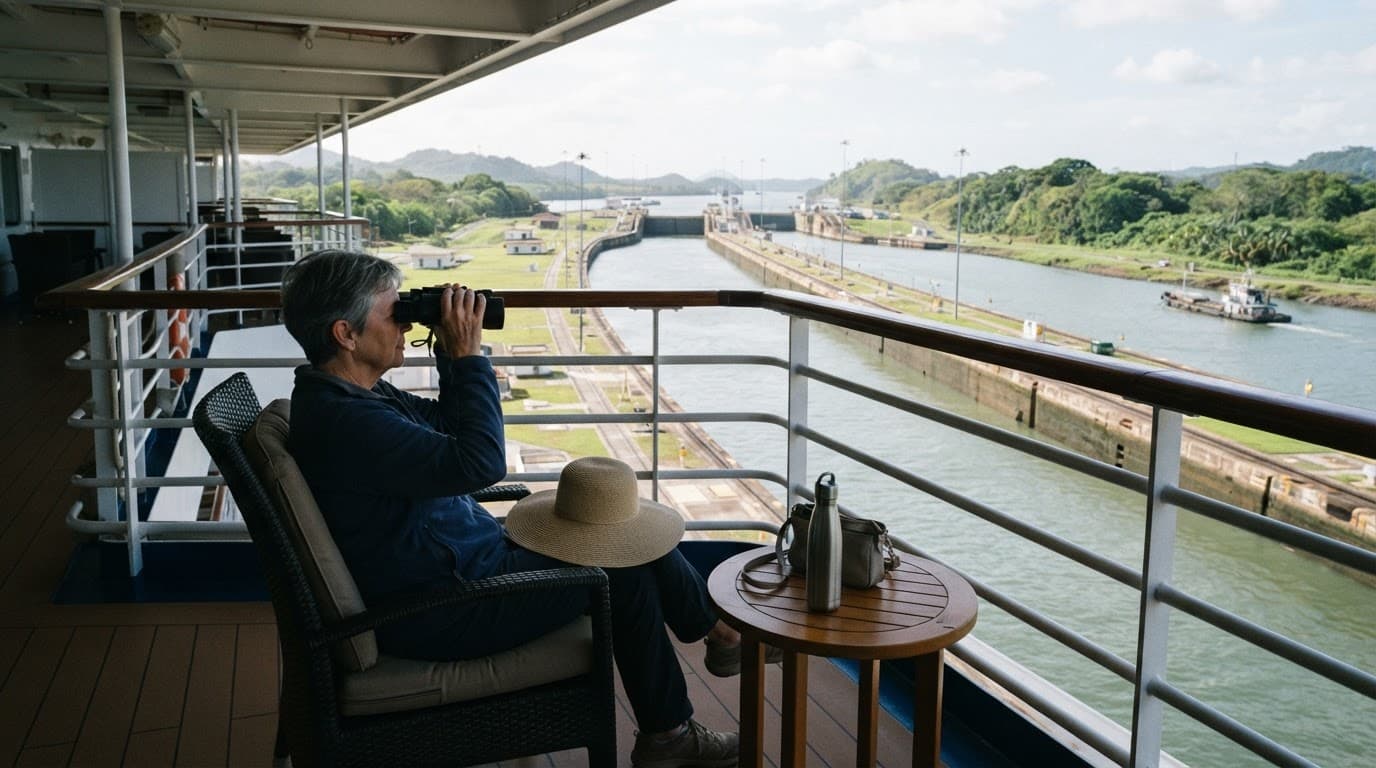
After the locks, the ship enters Gatun Lake and the Gaillard Cut area. The scenery opens into green hills, forested banks, small workboats, and occasional signs of canal infrastructure.
A Panama transit often begins early and may run well into the afternoon. One Princess world-cruise schedule listed a full passage from 6:00 a.m. to 4:30 p.m., although your sailing's timing can differ.
The Suez Canal has a different kind of drama
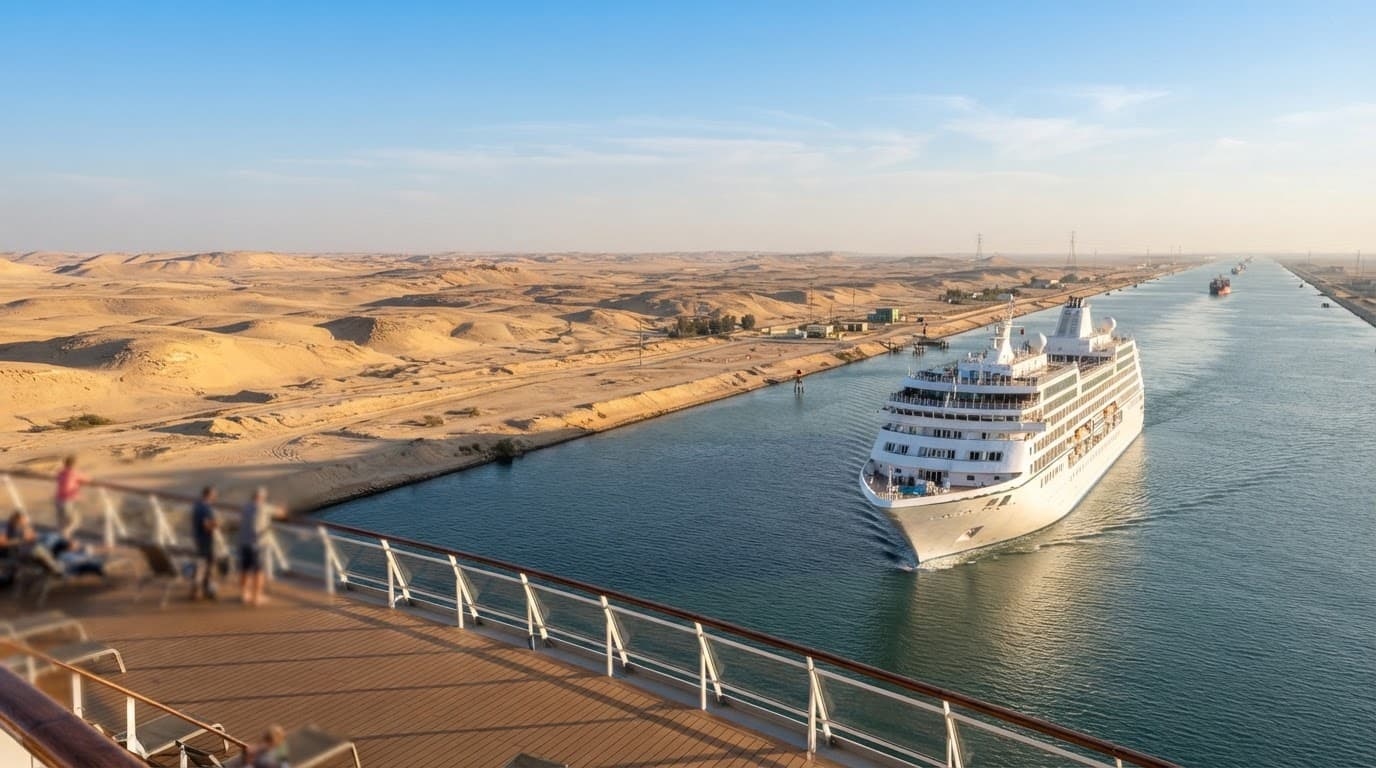
The Suez Canal has no locks because the Mediterranean Sea and Red Sea sit at nearly the same level. Instead, the experience centers on the scale of the passage, the close desert banks, canal traffic, and the ship's place in a controlled convoy.
The Suez Canal Authority regulates transits under its navigation rules and current circulars. Passenger ships remain a distinct category in those rules, so their operators work through the authority's traffic procedures and agents.
Expect a long horizontal view
The Panama Canal constantly changes elevation and scenery. The Suez feels more linear. Sand, low buildings, service roads, dredging equipment, fishing boats, and other vessels can remain in view for long stretches.
That doesn't make it dull. The contrast between a large ocean ship and the narrow strip of water through Egypt is striking. Early morning and late afternoon light can be especially attractive, although haze sometimes softens the view.
A transit may cross two dates
Suez Canal timing is less predictable for passengers because ships fit into convoy and traffic arrangements. A cruise line may list canal transit on consecutive days, or note an evening entry followed by a morning exit.
Princess Cruises has scheduled Suez transit entries at 5:00 p.m. on two consecutive dates for a 2026 world voyage. Treat published times as planning guides, not promises. Wind, traffic, security procedures, and authority instructions can alter them.
Panama Suez Canal transit comparison for cruise travelers
A Panama Suez Canal transit puts two famous shortcuts on the same long itinerary, yet they reward different travel styles. This quick comparison can help you decide which one deserves priority.
| Feature | Panama Canal | Suez Canal |
|---|---|---|
| Main visual experience | Lock chambers, tropical vegetation, Gatun Lake | Desert banks, long waterway, convoy traffic |
| Water-level changes | Yes, ships rise and descend through locks | No locks in the main passage |
| Typical passenger rhythm | Active viewing around major lock stages | Long periods of open-deck observation |
| Climate feel | Hot, humid, and often rainy | Dry, bright, and sometimes dusty or hazy |
| Schedule pattern | Often a full daylight day | May begin or end overnight |
| Nearby calls | Colon, Cristobal, Balboa, Panama City area | Port Said, Suez, and Egyptian ports |
Choose Panama if you want visible mechanical action and lush scenery. Choose the Suez if the idea of crossing Egypt by ship, with the desert on both sides, matters more.
A canal transit is a ship operation before it is a sightseeing program, so the exact timetable can move even after you board.
Choosing the right world-cruise itinerary
A route that includes both canals usually travels around the globe through the Caribbean, Central America, the Mediterranean, Egypt, the Red Sea, and the Indian Ocean. Still, no two itineraries are alike.
Some voyages include Panama but omit the Suez because they sail around Africa. Others bypass the Red Sea due to security assessments, then replace the Suez with Cape of Good Hope routing and extra African ports.
Read the route, not only the destination list
A brochure may highlight "Egypt" while the ship calls at Alexandria rather than transiting the Suez. Likewise, "Panama" may mean a day in Colon rather than a complete crossing.
Check the day-by-day itinerary map. A true Panama crossing links the Caribbean and Pacific sides. A Suez passage links the Mediterranean side with the Red Sea route.
Also check whether the crossing appears early or late in the voyage. A transit after several weeks at sea can feel relaxed. The same day near the start may compete with unpacking, jet lag, and learning the ship.
Size can affect the canal experience
Cruise ships must meet each canal's dimensional and operational requirements. Panama's older locks and newer lock complexes have different size limits. Suez traffic is also governed by vessel rules, drafts, convoy procedures, and authority approval.
Don't assume a smaller ship always provides a better crossing. Larger ships often have more open deck space and better public lounges. Smaller vessels may feel closer to the banks and can sometimes offer more flexible itineraries. Compare the ship's deck plan, public spaces, and viewing access before booking.
Pick a cabin for comfort, not a perfect view
A balcony cabin sounds ideal for canal day, and it can be. Yet the best view changes constantly as the ship turns, enters locks, or travels alongside a bank.
A cabin on the wrong side may face a lock wall for part of the Panama passage. In the Suez, one side can offer water and passing traffic while the other shows the nearer bank. Public decks often give a broader perspective than any private balcony.
Prioritize access and shade
Choose a cabin near elevators if long walks are difficult. Canal days involve repeated trips between your room, observation decks, lounges, meals, and restrooms. Midship cabins can also reduce motion during the surrounding sea days.
For many travelers, a balcony is most useful for an early wake-up view, a quiet break, and quick access to fresh air. It isn't necessary for enjoying the transit.
Find your ship's overlooked viewpoints
The forward-facing public deck often fills first. Instead, look for a high aft deck, promenade deck, observation lounge, or shaded pool-side seating with clear rail views.
Arrive early for lock approaches, then move as the ship progresses. Staff may close certain outdoor areas for operational reasons, so follow crew instructions without arguing for access.
Heat, rain, and desert glare need a plan
The Panama Canal sits in a tropical climate. Heat and humidity can build before noon, while brief downpours are possible. The Suez is often dry and bright, but strong sun, wind, and dust can make exposed decks uncomfortable.
Pack a brimmed hat that won't blow away, sunglasses with UV protection, sunscreen, and a refillable water bottle. Light layers work better than heavy clothing. Air-conditioned lounges provide an easy reset without missing the whole event.
Photo by Rodolfo Quirós
Save your energy for the changing moments
You don't need to stand outside for every hour. In Panama, time your deck visits around lock entry, gate openings, and the transition into Gatun Lake. For the Suez, reserve energy for dawn, sunset, passing ships, and sections where the banks draw closer.
If you use a mobility scooter, wheelchair, cane, or walker, scout accessible viewing areas on the first day of the cruise. Ask Guest Services about automatic doors, elevator routes, shaded seats, and accessible restroom locations near your preferred deck.
Photograph the canals without missing them
Canal photography rewards patience more than expensive equipment. The view changes quickly in Panama, while the Suez often offers stronger graphic lines, open water, and desert color.
Use your phone or camera in short bursts. Then put it down. Watching a lock gate close or seeing the desert pass at ship level feels better when you aren't monitoring every frame.
Make the most of Panama images
For lock photos, include the ship's railing, the chamber wall, or a gate to show scale. A wide lens works well when the ship sits close to concrete walls.
Rainforest scenes benefit from a little zoom, especially when birds, workboats, or distant hills appear. However, avoid blocking railings for long periods. Everyone wants a turn.
Adjust for Suez sun and haze
Shoot early or late when light sits lower. At midday, use the ship's shade to reduce glare and hold your camera steady against a rail if permitted.
A polarizing filter can help dedicated camera users, but don't expect it to erase all haze. In strong desert light, simple images with a ship, shoreline, and wide sky often look better than crowded compositions.
Listen for announcements and keep plans flexible
Cruise directors often provide canal commentary, but bridge announcements and operational updates matter most. They may tell you when a pilot boards, when lock entry begins, which deck areas are open, or why the ship has slowed.
Turn on cabin announcements if your ship offers that setting. On a long voyage, many guests switch them off for quiet. Canal days are a good reason to reactivate them.
Don't overbook the day
Skip appointments that lock you indoors for hours. Avoid a spa treatment, specialty lunch, or fitness class that overlaps the advertised key transit window unless you don't mind missing it.
Breakfast can be busy, so grab coffee and a light meal before heading outside. Lunch buffet lines may also peak when passengers come in from the sun. A room-service snack or a quieter dining venue can preserve more viewing time.
Know when an excursion conflicts
During a full transit, you usually remain aboard. Shore excursions are relevant only when the ship calls at an approach port or has a separate Panama or Egypt stop.
If an excursion description claims a canal visit, confirm whether it occurs on the same day as ship transit or at a different port. The distinction can save you from booking an experience that duplicates, or fails to include, what you expected.
Security, routes, and canal costs can change
Canal passages depend on more than weather. Water availability, maintenance, traffic volume, security assessments, diplomatic conditions, and authority rules can affect schedules and routes.
The Panama Canal Authority manages a booked traffic system and coordinates daily movements. The Suez Canal Authority issues navigation circulars, including updates that apply to passenger and cruise ships. Cruise lines may revise routes when conditions change.
Treat the published route as a plan
A cruise line may omit the Suez, reroute around Africa, alter a Panama arrival, or substitute a port. These changes can add sea days and affect visa plans, flight connections, and travel insurance needs.
Read your cruise contract and travel insurance policy before final payment. Look for itinerary-change language, missed-port coverage, and trip-interruption terms. Don't buy nonrefundable independent tours near an uncertain transit date.
Canal tolls are part of the ship's economics
Passengers don't buy individual canal tickets. The cruise line or its operator pays transit-related charges and handles booking through the canal's required systems.
Those costs can influence fare pricing and itinerary design, yet they aren't usually a separate retail charge for each guest. Special launch access in Panama isn't a standard cruise excursion, either. The Panama Canal Authority treats guest and courtesy transits as advance-approved operational arrangements, not walk-up sightseeing.
Final thoughts on canal days at sea
A Panama Suez Canal transit is best enjoyed with a loose schedule, comfortable shoes, sun protection, and a willingness to watch a working waterway at its own pace. Panama delivers locks and rainforest in constant motion. The Suez offers distance, desert, and the strange pleasure of crossing Egypt by ship.
Choose a full transit when the passage itself matters as much as the ports. Those hours on deck can become the stories you remember long after the world cruise ends.
Recent Posts