

World Cruise Planning: Five Priorities for Couples
A good world cruise plan starts with five priorities you both agree on: budget, trip length, itinerary, cabin comfort, and daily life aboard. You don't need identical tastes, but you do need a shared definition of a good trip before comparing sailings.
One of you may care most about destinations, while the other wants space to relax. Start by naming those differences, then use them to build a shortlist that works for both of you.
Turn separate wish lists into shared priorities
Before looking at ships, each of you should write down what you want from the trip. Work separately at first. Include the places you hope to visit, how long you can be away, and what would make months on board comfortable.
Then compare notes and sort each preference into one of these groups:
| Category | What it means for your decision |
|---|---|
| Must-have | A condition both partners agree the trip needs to meet. |
| Nice-to-have | A feature you'd enjoy but can give up for a stronger overall fit. |
| Individual preference | Something one partner values that doesn't need to shape every shared decision. |
For example, a firm spending limit may be a shared must-have. A balcony could be a nice-to-have, while an interest in museum tours could remain an individual preference.
If one person calls something essential and the other disagrees, talk about the reason behind it. A balcony may mean private outdoor space to one traveler; the other may be happy using a public deck. That distinction gives you a useful trade-off to discuss.
Priority 1: Set a budget for the entire trip
Start with the amount you're both comfortable spending, including the costs beyond the cruise fare. A lower advertised price can become less attractive once you add the things you'd buy anyway.
Compare the full cost for two
Our guide to world cruise prices and budget estimates describes a 2026 starting estimate of around $30,000 per person for an inside cabin on a premium line. That provides a reference point of roughly $60,000 for two before expenses outside the fare.
The guide also describes ocean-view and balcony cabins commonly falling in the $30,000 to $70,000 range per person. These are estimates, not quotes for a particular sailing.
Decide which extras matter to you
Add flights, hotels, transfers, insurance, visas, and expected shore spending to your budget. Then account for onboard expenses such as internet, laundry, drinks, gratuities, and specialty dining when they aren't included.
Keep a separate reserve for unexpected costs. Compare packages using benefits you'd both use, rather than giving equal value to every inclusion. An excursion credit matters more if it applies to tours you want than if it leaves you choosing activities to use it up.
Finally, agree on a ceiling and how you'll handle optional spending within it. That makes cabin and itinerary trade-offs easier later.
Priority 2: Agree on how long you can be away
A full voyage can last several months. The appeal of that uninterrupted journey deserves an honest conversation about what it means for work, family, health, and responsibilities at home.
Choose a comfortable time range
Instead of settling on a single ideal number, agree on the longest trip you could both enjoy. Include travel days and time to settle back in after the cruise, not only the nights aboard.
Talk about regular medications, access to care, and how much contact you'll want with people at home. Internet service at sea may be less reliable than a home connection, so a trip that depends on frequent video calls may feel different in practice.
Consider a segment as well as a full voyage
A segment can offer a defined region and return date without committing to the entire itinerary. It may suit a couple when one partner wants extended travel but the other isn't ready to spend several months away.
A full voyage offers continuity, including more time to settle into the ship and its community. Our guide to choosing between a full voyage and cruise segments can help you weigh that continuity against a shorter commitment.
Priority 3: Choose destinations and a manageable pace
Each of you should name a few destinations or experiences that matter most. Then look for routes that give both partners something to anticipate, rather than choosing solely by the number of ports.
Look at time ashore, not only the map
A port name doesn't show how much sightseeing time you'll have. Arrival and departure hours, distance to town, and the need to use a tender can all affect the day.
An overnight stay may allow dinner ashore or a performance in the evening. A shorter call might be enough for a walk near the pier, but less suitable for an attraction hours away. Treat the quality of time in your priority destinations as part of the itinerary decision.
Balance busy stretches with recovery
Look at the sequence of port calls alongside sea days. Several early starts and full-day tours in a row can feel tiring, even when every destination sounds appealing.
Discuss whether you prefer a busy route with frequent stops or a slower rhythm with more time aboard. Also leave room for itinerary changes: ports can be missed or schedules adjusted. A route with several appealing stops may be a better fit than one that depends entirely on a single call.
Priority 4: Pick a cabin for everyday comfort
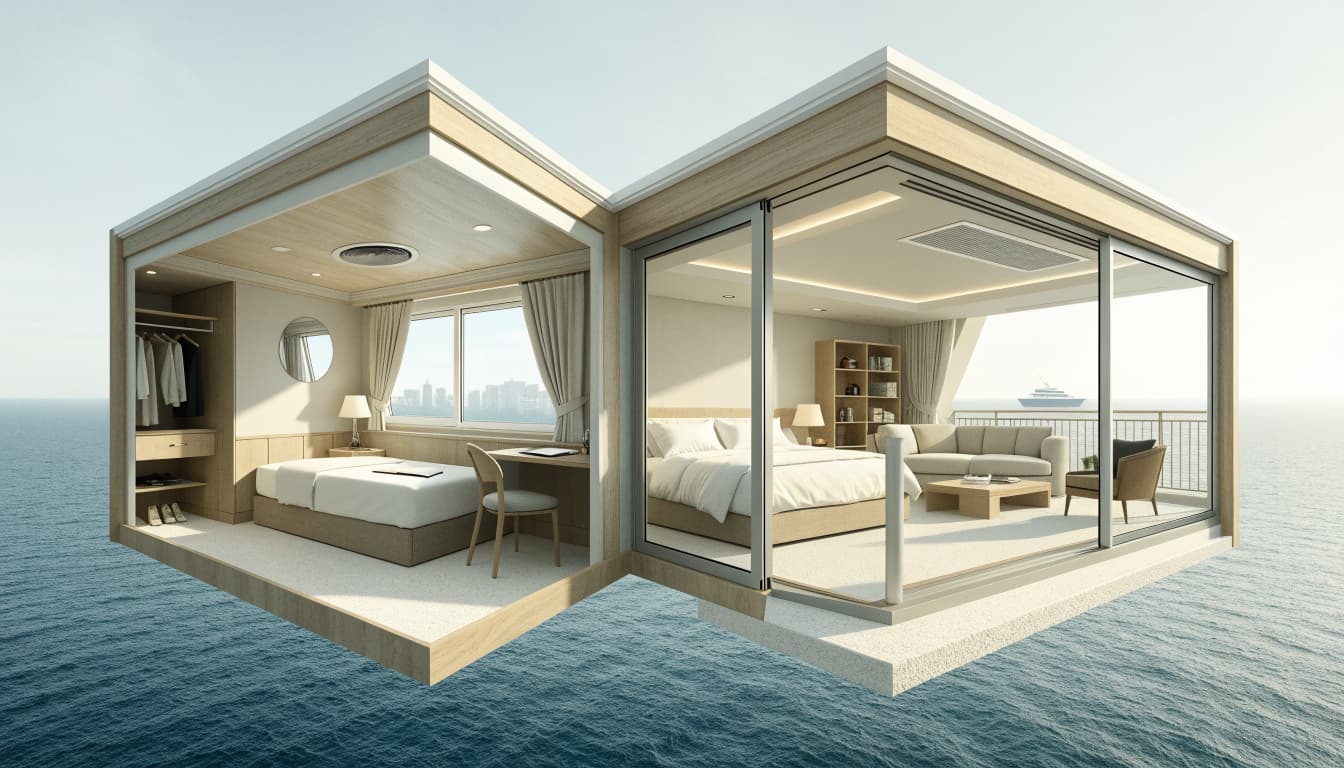
Your cabin is your bedroom and private retreat for weeks or months. The best choice depends on how you both expect to use it, not only on the category name.
Talk through your routines
Consider sleep schedules, storage, bathroom space, and whether one person needs a place to read while the other rests. Cabin location matters too. A room near an elevator may reduce walking, while a quieter position may suit a light sleeper.
If motion is a concern, a lower-deck, midship location may feel more comfortable for some travelers. Our guide to long-term cruise cabin features covers more of the practical details that affect life aboard.
Weigh private space against other spending
A balcony offers private outdoor space, but its value depends on how often you'll use it. An inside cabin may appeal if you're happy spending daylight hours on deck and would rather put the difference toward excursions. An ocean-view cabin offers another option.
Compare the actual layout, storage, and location alongside the fare. If a larger cabin means giving up tours that matter to both of you, discuss that trade-off before treating the upgrade as essential.
Priority 5: Plan the life you'll enjoy on board and ashore
The ship is part of the destination on a long voyage. Dining, activities, quiet spaces, and the way you spend port days can matter as much as the route itself.
Picture an ordinary sea day
Talk about what each of you would enjoy on a day without a port call. One partner might prefer lectures or social activities; the other may want a book and an unhurried lunch. Neither person needs to follow the other's schedule all day.
Dining routines deserve attention too. Fixed seating can appeal if you like a dependable evening schedule and familiar tablemates. More flexible dining may suit you if your plans change after a long day ashore.
Allow for different excursions
Choose a manageable number of shared experiences that matter to both of you. Then leave space for individual interests. One person can take a guided tour while the other visits a museum or enjoys a quiet day aboard.
Budget for these choices together, including transport and meals ashore. For more ideas, our guide to balancing guided tours and independent port days covers ways to keep both spending and energy in perspective.
Use your five priorities to build a shortlist
Once you've discussed each area, write one shared sentence for every priority. Make each sentence clear enough to use when comparing a sailing: a maximum total budget, for example, or an acceptable range of nights away.
Keep both partners' individual preferences beside those shared decisions. Someone's wish for private outdoor space can stay visible even if you agree a balcony isn't essential.
Next, compare a small number of sailings against the same five priorities. Eliminate options that exceed a genuine must-have, then discuss the remaining trade-offs together. A stronger itinerary may be worth a smaller cabin, while a shorter voyage may free up money for experiences ashore.
A trade-off works when both partners understand what they're giving up and consider the benefit worth it.
Review the whole choice before deciding. A cruise shouldn't meet one person's top priority while leaving the other with a room, pace, or total cost they expect to dislike.
If you'd like help comparing options, Schedule a Consultation with us to discuss your priorities. You can also Subscribe to Our YouTube Channel for more on world cruises and life aboard.
Choose a voyage that works for both of you
Your five priorities don't have to carry equal weight. A comfortable budget or a firm return date may narrow the field first, while cabin type and excursions offer more room to compromise.
Keep the shared experience in view as you choose. The right sailing gives each of you things to look forward to and a daily routine you can enjoy together.
Recent Posts