
Choosing a World Cruise Cabin for Six Months
A six-month voyage turns a cabin into your bedroom, dressing room, office, storage locker, and retreat. Choosing a world cruise cabin therefore requires more than deciding whether you prefer an inside room or an ocean view.
A room that feels fine for seven nights may feel cramped after several months. The right choice depends on layout, light, noise, storage, budget, health needs, and how often you'll use the ship's public spaces. Start with daily life, then compare the cabins available on your ship.
Why six months changes the cabin decision
On a long sailing, your cabin becomes the place where you sleep, dress, read, recover, and store everything you bring. Ship layouts, amenities, and policies vary, so a category name never tells the whole story.
Short-cruise comfort does not equal long-stay comfort
On a short cruise, you may use the cabin mainly for sleeping and showering. A compact room can feel perfectly adequate when you're ashore most days and unpacking only for a week.
A six-month voyage includes quiet sea days, bad weather, laundry, illness, changing seasons, and days when you want privacy. You may also spend more time reading, working, or relaxing in the room. A chair, usable desk, natural light, and accessible storage become daily conveniences rather than occasional extras.
For a six-month voyage, judge a cabin by how it feels on an ordinary sea day, not only on the first evening.
Cabin location shapes your routine
Midship cabins on lower decks often feel less movement than cabins at the front or rear, although ship design and sea conditions affect the experience. If you are sensitive to motion, ask the cruise line which locations they recommend.
Noise deserves equal attention. Cabins beneath pools, buffets, theaters, nightclubs, or gyms may hear furniture moving or music at unusual hours. Rooms beside elevators, stairwells, crew areas, and laundry rooms can also have more foot traffic. Review the deck plan and ask about the exact cabin number before paying.
Which world cruise cabin fits your travel style?
Cabin categories provide a useful starting point, but they aren't standardized across cruise lines. A balcony cabin on one ship may have less storage or a smaller outdoor area than one on another ship.
| Cabin type | May suit you if you... | Check before booking |
|---|---|---|
| Inside | Want the lowest fare and sleep well in darkness | Room size, storage, ventilation, and any virtual-window feature |
| Ocean view | Want daylight without paying for a balcony | Window size, obstruction, seating, and distance from public areas |
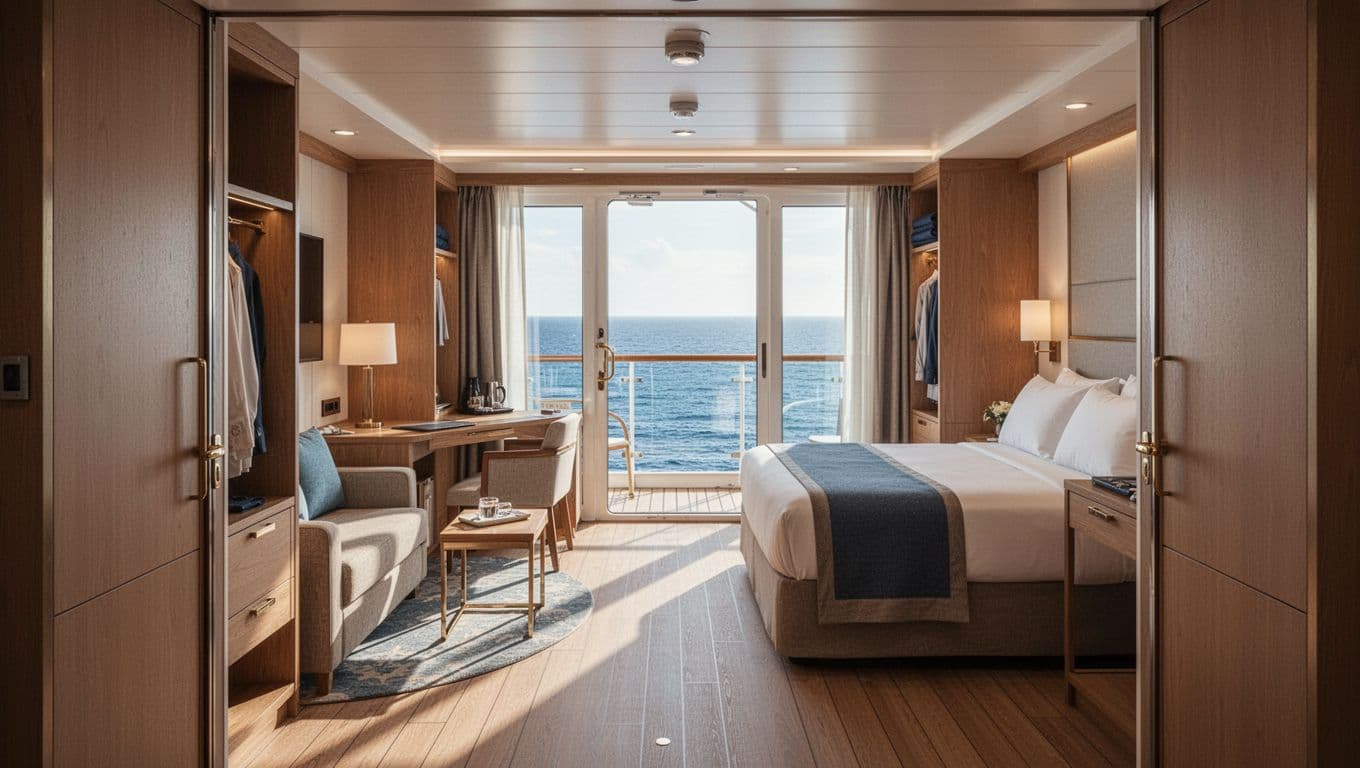
| Balcony | Expect to spend private time outdoors | Balcony depth, furniture, privacy, wind, and door threshold |
| Suite | Need separate living space or extra storage | Included benefits, bathroom layout, service fees, and exact floor plan |
An inside cabin can free up money for excursions, dining, or a second trip. However, some passengers find the lack of daylight difficult during a long voyage. An oceanview room adds a sense of time and weather without making outdoor space part of the fare.
Photo by Lachlan Ross
A balcony offers a private place for coffee, fresh air, or quiet reading. Still, cold temperatures, heavy wind, rain, and port restrictions can limit its use. Suites provide more room, but their extra benefits vary widely. Compare the full package, not only the floor area.
Build a cabin for everyday living
The best world cruise cabin supports ordinary routines without making every task feel difficult. Look beyond the bed and view. Focus on the details you'll use several times a day.
Check storage before you count on the closet
Six months of clothing may include warm layers, formal outfits, swimwear, walking shoes, and clothing for different climates. Ask how much hanging space the cabin has, whether shelves are adjustable, and whether the bed can hold suitcases.
A practical storage layout often matters more than a few additional square feet. Look for drawers near the bed, a place for shoes, hooks by the entrance, and enough counter space for toiletries. Couples should confirm that both travelers have usable closet and drawer space instead of sharing one narrow section.
Pack with the cabin in mind. Soft-sided bags can fit into awkward spaces more easily, but don't assume every bed accepts luggage underneath it. The cruise line can confirm the clearance for the exact ship and cabin type.
Look at light, work space, outlets, and the bathroom
Natural light can make a small cabin feel easier to live in. If you plan to work or read inside, check whether the desk has a proper chair, enough surface area, and outlets in convenient places. Outlet locations vary, and some cabins have limited charging space near the bed.
Wi-Fi access, internet packages, and connection quality also differ by line and itinerary. If remote work matters, ask what service the fare includes and whether the desk area can support your equipment.
Bathroom details become more noticeable over time. Check shower size, shelving, ventilation, door clearance, and whether the sink offers enough space for daily products. Laundry access matters too. Find out where the nearest self-service laundry is located, whether laundry is included in your fare, and whether suites receive a different service.
Balance cabin comfort against the total cost
A long voyage can make a cabin upgrade look expensive, especially when the price applies to two passengers. Compare the added cost over the full number of nights rather than reacting to the total alone. Dividing the difference by the voyage length shows what the extra space or balcony costs per day.
Decide what you will use often
A balcony may be a strong choice if you enjoy private outdoor time and expect to spend many sea days in the cabin. It may offer less value if you prefer the ship's lounges, spend most days ashore, or rarely use balconies in cool weather.
An inside cabin may be sensible for travelers who sleep well in darkness and want to direct their budget toward experiences. An oceanview cabin can provide a middle option. Suites deserve a closer calculation because they may include priority services, dining access, laundry, or other benefits, but the inclusions aren't the same on every ship.
Read the fare and booking policies carefully
Some world cruise fares bundle items that other fares charge separately. Check the exact terms for internet, drinks, laundry, specialty dining, gratuities, excursions, onboard credit, and medical services.
Also ask about payment dates, cancellation penalties, cabin changes, name changes, single supplements, and rules for joining or leaving at an intermediate port. A six-month booking has more financial exposure than a standard vacation, so the conditions deserve careful reading before you commit.
Match the cabin to the people sailing
A cabin that suits one passenger may frustrate two people. Personal habits, mobility, medical needs, and privacy preferences should influence the choice.
Couples need space for two routines
Couples often have different sleep schedules, packing habits, and ideas about cabin temperature or lighting. A sitting area can give one person somewhere to read while the other rests. Separate storage zones reduce daily friction, especially when both passengers bring formalwear and multiple pairs of shoes.
Ask whether the beds can convert between a queen and twin arrangement. Confirm the configuration for the exact cabin, since layouts can vary within the same category. It also helps to check the number and position of outlets, the bathroom counter space, and whether the balcony has two comfortable chairs.
Solo travelers should compare price and privacy
Solo passengers should compare a standard cabin, a dedicated solo room, and the single supplement on a larger cabin. A studio may cost less overall, but it can have less storage or a smaller bathroom. Policies and solo-cabin availability vary by ship.
A private balcony can be valuable for someone who wants quiet outdoor time without searching for an empty public area. On the other hand, a well-located oceanview or inside cabin may leave more money for shore activities. Solo travelers should pay close attention to hallway location, lighting, and access to elevators, dining rooms, and social spaces.
Mobility and medical needs require exact answers
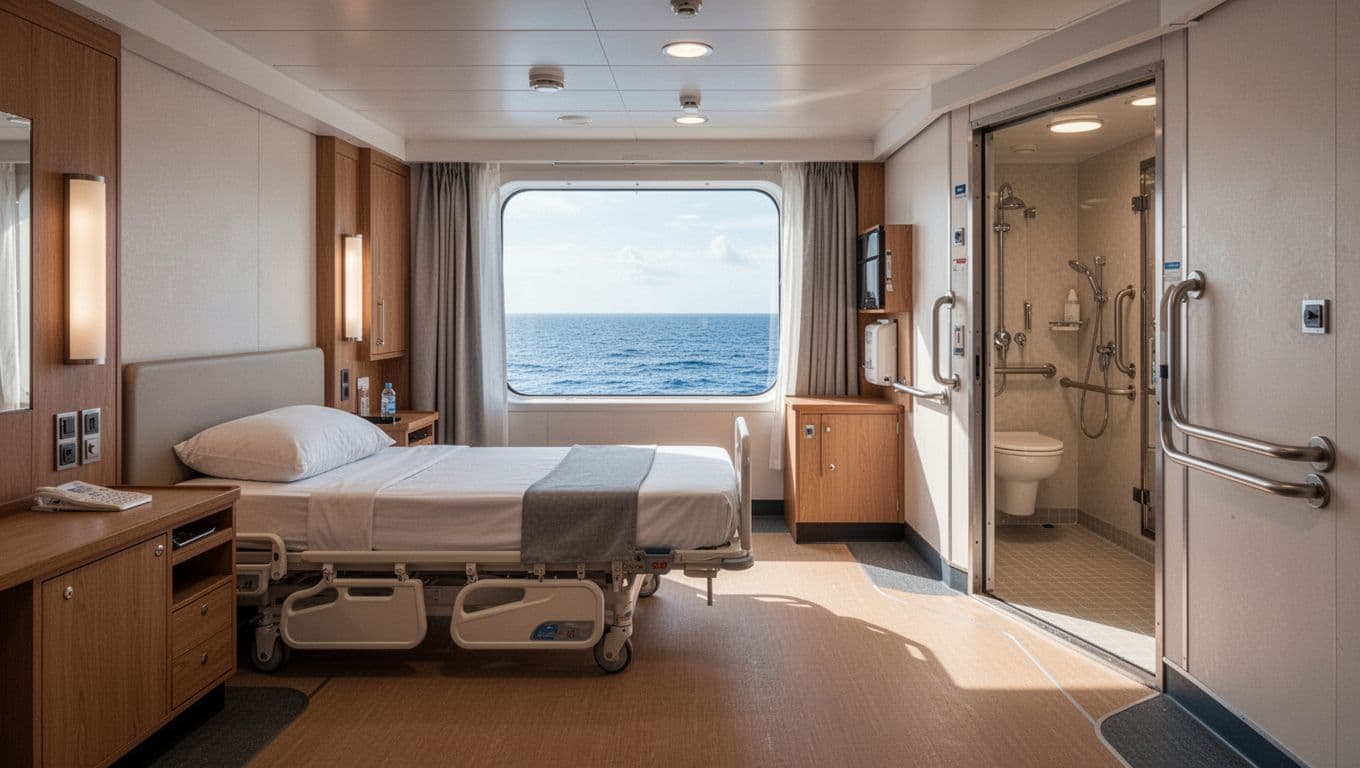
If you use a wheelchair, scooter, walker, or cane, ask for the dimensions of the accessible cabin and bathroom. Confirm doorway width, turning space, bed height, shower style, grab bars, sink clearance, and any threshold at the balcony or bathroom entrance.
A mobility device may need to remain inside the cabin rather than in a corridor. Ask where it can be stored and charged. The cruise line should also explain tendering arrangements, gangway access, and shore-excursion limits at ports where the ship cannot dock directly.
Passengers with medical needs should contact the line's accessibility or medical department before booking. Ask about refrigerator specifications for medication, electrical equipment rules, oxygen procedures, medical forms, supply delivery, emergency response, and the limits of onboard care. Bring written confirmation of any approved arrangements.
Questions to ask before booking
A sales page may show a category, deck, and view, but you need details about the actual room. Ask these questions in writing:
- What is the exact cabin number, and what rooms or public areas are directly above, below, and beside it?
- What are the cabin's interior dimensions, bathroom dimensions, bed configuration, and storage capacity?
- Can the beds separate, and can the room accommodate a rollaway, mobility device, or medical equipment?
- Is the balcony private, partially obstructed, shaded, exposed to wind, or smaller than the standard plan suggests?
- Where are the nearest elevators, laundry facilities, emergency exits, restaurants, and medical services?
- Does the fare include internet, laundry, gratuities, drinks, dining benefits, or onboard credit?
- What are the cancellation, transfer, payment, and cabin-change rules for a six-month booking?
- Are there restrictions for medication refrigeration, oxygen, powered mobility devices, or other health equipment?
- Will the same cabin remain available if you add or remove voyage segments?
Request current photographs, a floor plan, and the written cabin description. If the answer depends on ship or itinerary, ask the representative to identify the specific ship and sailing.
Conclusion
A world cruise cabin needs to work on quiet days, busy port days, and the occasional day when you want to stay in bed. Prioritize the layout, location, storage, bathroom, and policies that affect daily living, then weigh the cost of extra space or a balcony.
The right choice isn't universal. It is the cabin that matches your routines, your travel partner if you have one, and any mobility or medical requirements. Before booking, verify the exact room details in writing so six months aboard feels comfortable rather than cramped.
Recent Posts