How to Plan an Accessible Cruise Cabin for Six Months
A six-month world voyage turns your cabin into a bedroom, office, dressing area, storage room, and recovery space. An accessible cruise cabin must support daily routines for months, not merely meet your needs for a seven-night holiday.
Cabins with accessibility features are limited, and availability can disappear before general inventory. Start with your access requirements, obtain cabin-specific details in writing, and then assess the ship, ports, equipment, and total cost.
Why six months changes the cabin decision
A cabin that feels manageable for one week may become tiring after several months. You may spend more time inside during sea days, after demanding excursions, or when weather changes your plans. The room needs to support ordinary tasks without requiring unnecessary effort each day.
Think beyond the bed and view. Consider:
- How easily you can enter, turn, transfer, dress, and move between key areas.
- Whether the bathroom works with your mobility equipment and routine.
- How much storage you need for clothing across several climates.
- Whether the cabin location limits walking to elevators, dining rooms, laundry facilities, or medical services.
- How light, noise, vibration, and hallway traffic may affect sleep and recovery.
Cabin type also affects daily comfort. An inside room may provide value and a controlled environment, but some travelers find limited daylight difficult over a long sailing. A balcony offers fresh air and private outdoor space, although wind, rain, cold, or port restrictions can limit its use. A suite may provide more room, but its accessibility features and included services still require confirmation.
Match the accessible cruise cabin to your needs
Your request should describe what you need to do, not only name a diagnosis or equipment type. Requirements differ among travelers, ships, and itineraries, so a general accessibility label isn't enough.
Mobility, transfers, and bathroom access
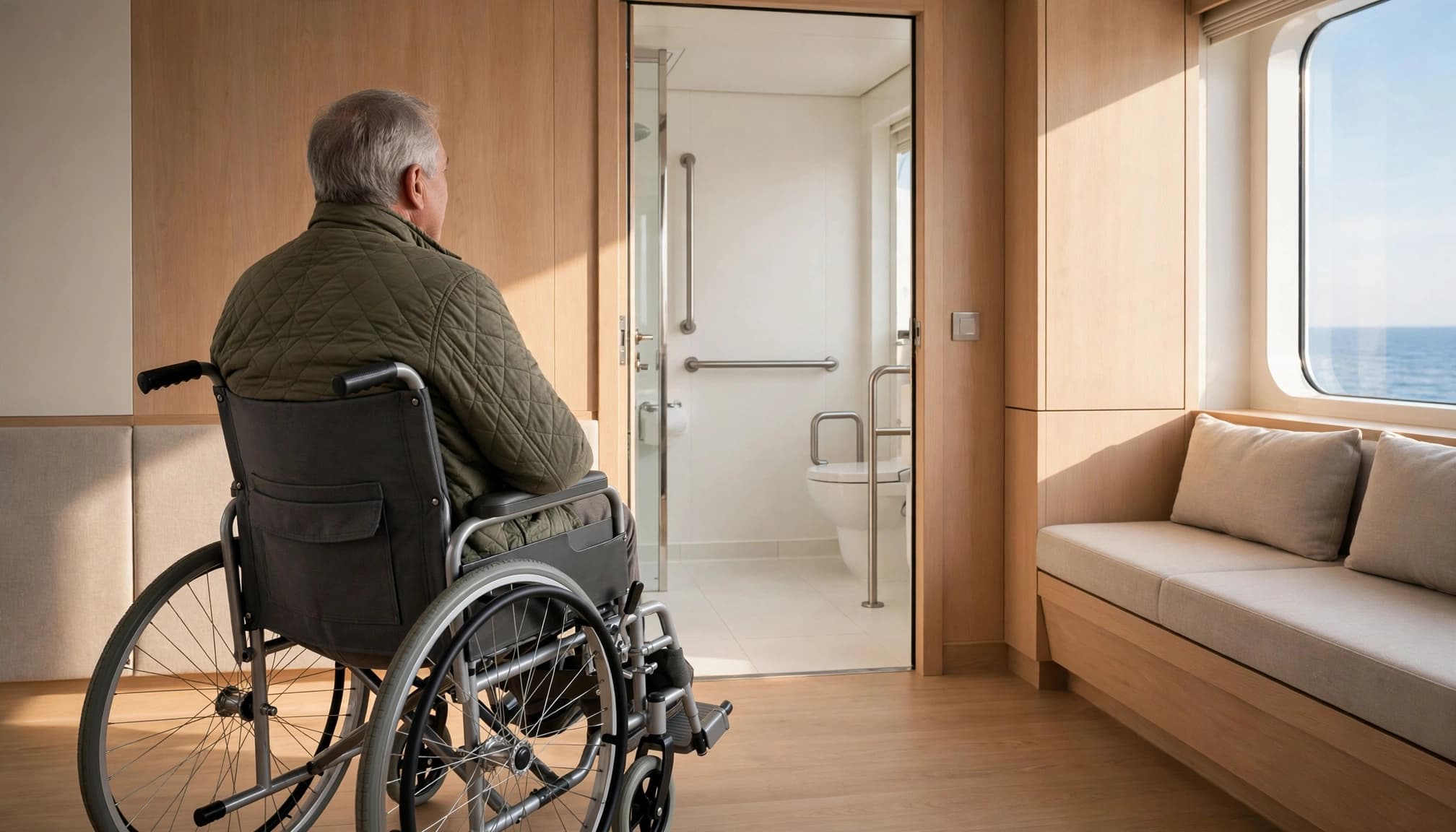
Ask whether the cabin has the doorway width, turning space, bathroom arrangement, and storage needed for your specific equipment. Request details about roll-in showers, grab bars, lowered fixtures, shower seating, thresholds, and the position of bathroom doors.
A mobility scooter, power wheelchair, manual wheelchair, walker, or transfer aid may need different clearances. Also ask where the equipment can be stored and charged without blocking the entrance or emergency route. Don't assume a larger cabin automatically has a more usable layout.
A current floor plan and photographs can reveal features that a short cabin description leaves out. Ask the cruise representative to identify the exact ship, cabin number or category, and sailing.
Hearing, vision, cognitive, and medical considerations
Hearing access may involve visual alerts, communication preferences, captioning, or arrangements for announcements. Travelers with low vision may need good lighting, predictable furniture placement, and clear routes to the bathroom and exit. Cognitive access can involve simple communication, familiar routines, reduced clutter, or support with changing schedules.
Medical needs deserve early discussion. Oxygen concentrators, dialysis routines, refrigerated medication, service animals, and other health equipment may require forms, documentation, or approval before departure. Onboard medical services also vary by vessel and itinerary, and they shouldn't be treated as a substitute for your usual clinical care.
Explain your needs in writing, then ask the cruise line to confirm what it can provide. Requirements and services can also vary by jurisdiction, so confirm any legal, medical, or safety issue with the relevant provider or qualified professional.
Verify the cabin before you pay
Verbal reassurance isn't enough for a six-month booking. Accessibility inventory is limited, and a suitable cabin may be difficult to replace after payment. Request the current cabin description, floor plan, and photographs before making a final decision.
Questions to ask the cruise line
Use direct, cabin-specific questions:
- What is the clear width of the cabin and bathroom doorways?
- Does the bathroom have a roll-in shower, grab bars, a seat, and sufficient maneuvering space?
- Are fixtures lowered, and where are they positioned?
- What is the path from the cabin to the nearest elevator?
- Is the route to dining, laundry, medical services, and public lounges step-free?
- Can my mobility device fit inside the cabin and charge safely?
- Are there thresholds, ramps, narrow turns, or heavy doors along the usual route?
- Will furniture be movable, and can the crew accommodate an approved layout?
- Are visual alarms, accessible announcements, captioning, or communication support available?
- What forms or approvals are required for equipment, medication, oxygen, dialysis, or a service animal?
- What happens if the assigned cabin changes because of maintenance or an itinerary adjustment?
Ask the representative to put the answers in writing. If a feature depends on the ship or itinerary, the response should name the specific vessel and sailing.
A practical cabin verification checklist
Before booking, compare the written information with your real daily routine. Confirm that you can:
- Enter and leave without assistance that you don't normally need.
- Reach the bed, bathroom, closet, desk, balcony, and controls.
- Turn or transfer safely with your usual equipment.
- Store mobility aids without narrowing the route.
- Reach outlets for chargers and equipment.
- Use the bathroom at night with the available lighting.
- Access emergency information and follow the evacuation plan provided by the ship.
- Manage clothing, luggage, and supplies without creating trip hazards.
If possible, inspect a sister cabin with the same layout before sailing. A marketing photograph may show an attractive room without showing turning space, door swings, thresholds, or the placement of furniture.
Prepare equipment and supplies for six months
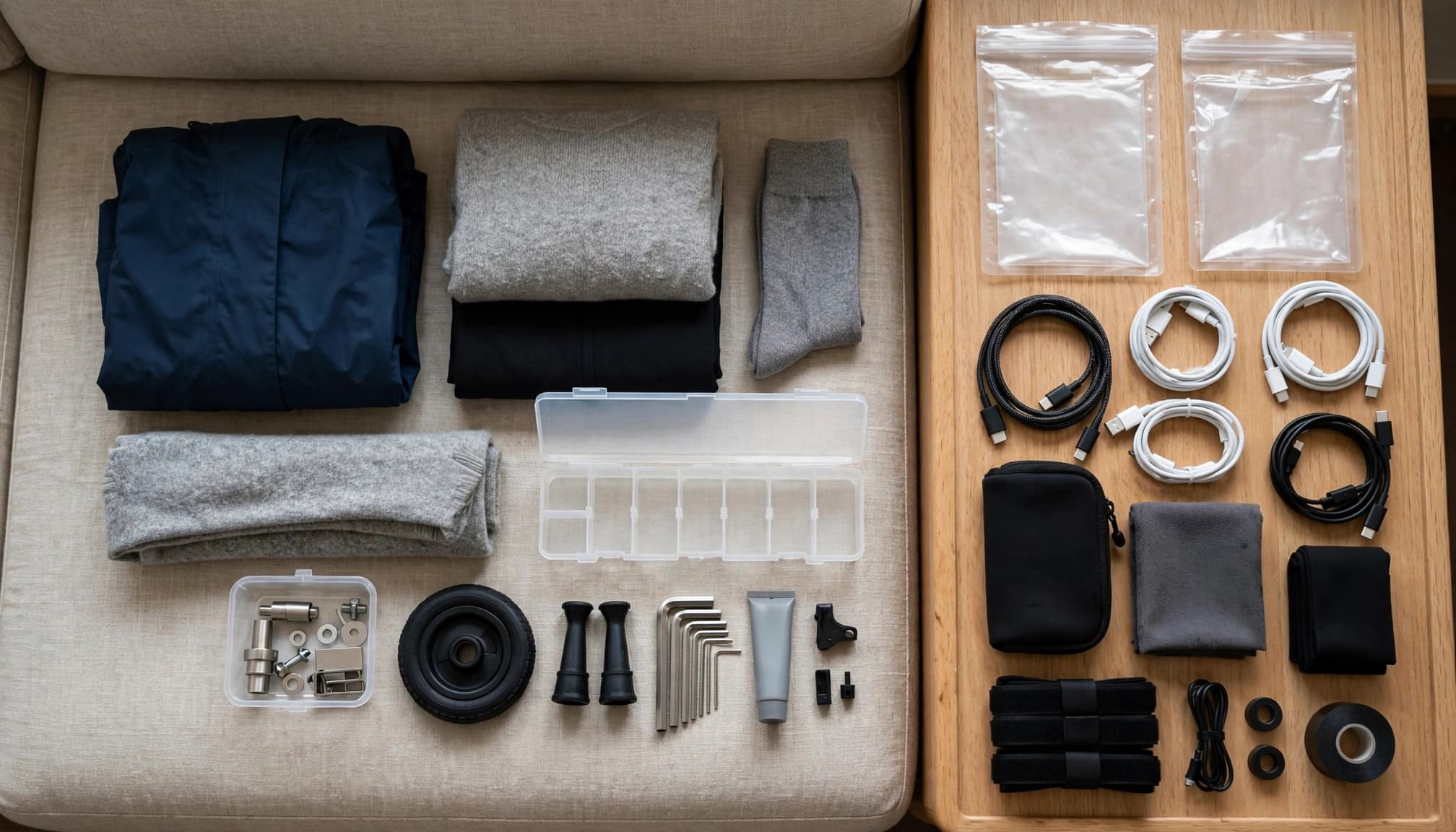
Long-voyage planning must account for wear, delays, changing climates, and limited access to familiar suppliers. Create a written inventory for every essential device and routine. Include model details, charging requirements, replacement parts, warranties, and the contact information for your equipment provider.
Plan maintenance, charging, and backup needs
Ask whether the ship can provide suitable power, storage, or technical assistance. Don't assume the onboard team can repair specialized equipment. Carry the parts and tools your manufacturer or equipment provider recommends, along with backup charging solutions when appropriate.
Protect equipment from moisture during embarkation, port transfers, and tender operations. Keep important instructions and serial numbers in a secure digital and printed format. Travel insurance may handle equipment differently from medical treatment, so review the policy before departure.
Organize medication, food, and laundry routines
Medication planning should begin with your prescribing clinic. A six-month itinerary can cross many borders, time zones, and pharmacy systems. Ask about refills, documentation, storage temperatures, restricted medicines, and what happens if the ship misses a port. These details vary by medication, itinerary, and jurisdiction.
Dietary needs require advance notice too. Tell the cruise line about allergies or medical diets before sailing. After boarding, speak with the dining team about cross-contact, packaged ingredients, buffet choices, and specialty restaurants. Procedures may differ between ships.
Laundry is another daily-life issue. Ask where accessible laundry facilities are located, whether pickup service is available, and how far you must travel from the cabin. Pack clothing for tropical heat, cool evenings, formal nights, and changing weather without filling every route with bags.
Plan for sea days, ports, and accessibility gaps
A suitable cabin doesn't guarantee an accessible experience ashore. Ports may involve uneven pavements, steep ramps, tender boats, limited accessible transport, or excursions that require more walking than advertised.
Assess the ship between destinations
Review the medical department, elevators, fitness facilities, quiet lounges, library, religious services, enrichment spaces, laundry options, and internet access. On long stretches without a port, these facilities shape your routine.
Ask how the ship handles urgent disembarkation, medical appointments, equipment problems, and changes to accessible services. Emergency procedures may differ by vessel, and crew assistance can't be assumed to replace your own mobility or communication plan.
Check every excursion and port
Request accessibility details for each excursion, not only the ship's general accessibility policy. Ask about vehicle lifts, walking distances, steps, restroom access, tender requirements, surface conditions, and whether mobility equipment stays with you.
Keep alternatives for important destinations. A port may be suitable for independent exploration but unsuitable for a planned tour. Itineraries can also change because of weather, port conditions, or operational decisions. A missed call shouldn't leave you without a manageable way to spend the day onboard.
Budget for the full six-month commitment
The fare is only one part of the cost. Add flights, hotels before embarkation, insurance, visas, equipment transport, medication preparation, laundry, internet, accessible transfers, private guides, replacement supplies, and possible medical expenses.
Ask whether the fare includes internet, laundry, gratuities, drinks, specialty dining, or onboard credit. Then confirm cancellation, payment, transfer, and cabin-change rules. If you add or remove voyage segments, ask whether the same cabin remains available and whether accessibility arrangements carry over.
For a high-consideration booking, a private planning conversation can help compare the cabin, ship, itinerary, and inclusions against your daily needs. You can Schedule a Consultation to discuss an extended cruise plan, or Subscribe to Our YouTube Channel for more world cruise planning guidance.
Key Takeaways
- Start early because accessible cabins are limited.
- Describe your actual routines and equipment in writing.
- Confirm the exact cabin layout, bathroom, route, storage, and charging options.
- Treat hearing, vision, cognitive, dietary, and medical needs as separate planning areas.
- Ask about forms and approvals before payment.
- Review every port and excursion for accessibility gaps.
- Carry a maintenance plan, supplies, documentation, and backup options.
- Compare the full cost of six months, not only the advertised fare.
- Reconfirm arrangements shortly before departure because policies and itineraries can change.
FAQ
When should I reserve an accessible cruise cabin?
Begin as soon as you identify a suitable voyage. Accessible inventory is limited, and the right cabin may sell before standard categories. Early planning also leaves time for equipment forms, medical documentation, medication preparation, insurance review, and excursion research.
Is every accessible cabin suitable for a wheelchair or scooter?
No. Accessibility categories and layouts differ. A cabin may offer a wider doorway but lack the turning space, bathroom arrangement, charging location, or storage you need. Ask for the exact floor plan and measurements, then compare them with your equipment and transfer routine.
Are shore excursions included in the ship's accessibility promise?
Not necessarily. Ship access and shore access are separate questions. A port may require a tender, involve uneven ground, or offer transportation without suitable equipment. Review each excursion with the cruise line or tour operator, and keep an onboard alternative when access details are uncertain.
Can the ship manage my medical or dietary needs?
Possibly, but services vary by vessel, itinerary, and jurisdiction. Notify the cruise line before sailing, complete any required forms, and speak with the appropriate onboard team after boarding. Your cruise provider's arrangements shouldn't replace guidance from your prescribing clinic or qualified medical professionals.
Conclusion
A six-month voyage asks more of a cabin than a short holiday does. The right choice supports your movement, rest, equipment, health routines, and privacy while keeping the ship's services and port realities in view.
Confirm the exact layout in writing, prepare for maintenance and supplies, and assess each destination separately. When the cabin works for ordinary days as well as difficult ones, the ship can feel like a comfortable temporary home instead of another obstacle to manage.
Recent Posts