
World Cruise Embarkation Day: What to Expect
On world cruise embarkation day, you'll make your way to the terminal, complete check-in, and board the ship that will be your home for the voyage. The day can feel much like the start of a shorter cruise, with one difference: you're settling in for weeks or months.
A little preparation gives you room to enjoy that beginning. Keep your essentials close , allow time to reach the port, and leave the rest of the day flexible.
Prepare for a Longer Trip Before You Leave Home
Your embarkation experience starts before you reach the terminal. A manageable luggage plan and a comfortable journey to the departure city can make the first day feel less rushed.
Give yourself time in the departure city
If you're flying independently, consider arriving at least one day before embarkation. Two nights can be useful after a long international flight or when your route involves limited flight options. That extra time gives you a cushion for delays and a chance to rest.
Plan your transfer around the actual terminal rather than the city name alone. Some ports are a substantial drive from the city they serve, so the distance can affect your hotel choice and departure-day plans.
Your choice of embarkation port also shapes your flights and luggage transfers. For a full voyage, those practical details deserve as much attention as the itinerary.
Pack a carry-on for your first day
Keep your passport, travel documents, wallet, prescription medication, and essential medical supplies with you. Add your phone, charger, glasses, and a change of clothes. A light layer can be useful in a cool terminal or onboard.
Your carry-on should be comfortable enough to manage alongside your other luggage. If you'll want swimwear or a particular outfit on the first day, put it in that bag too.
For the rest of your wardrobe, think in terms of laundry cycles rather than packing a separate outfit for every day. Our packing list for different climates can help you plan for warm ports, cooler crossings, and evenings onboard.
Arriving at the Port and Completing Check-In
On the day itself, your first task is getting yourself and your bags to the terminal. Allow room in your plans for traffic and the practicalities of moving more luggage than you might take on a short vacation.
At the terminal, keep your travel paperwork and identification within easy reach. You'll complete check-in before joining the ship. The arrangements depend on the cruise line, port, and sailing, so your own travel documents are the guide to the day.
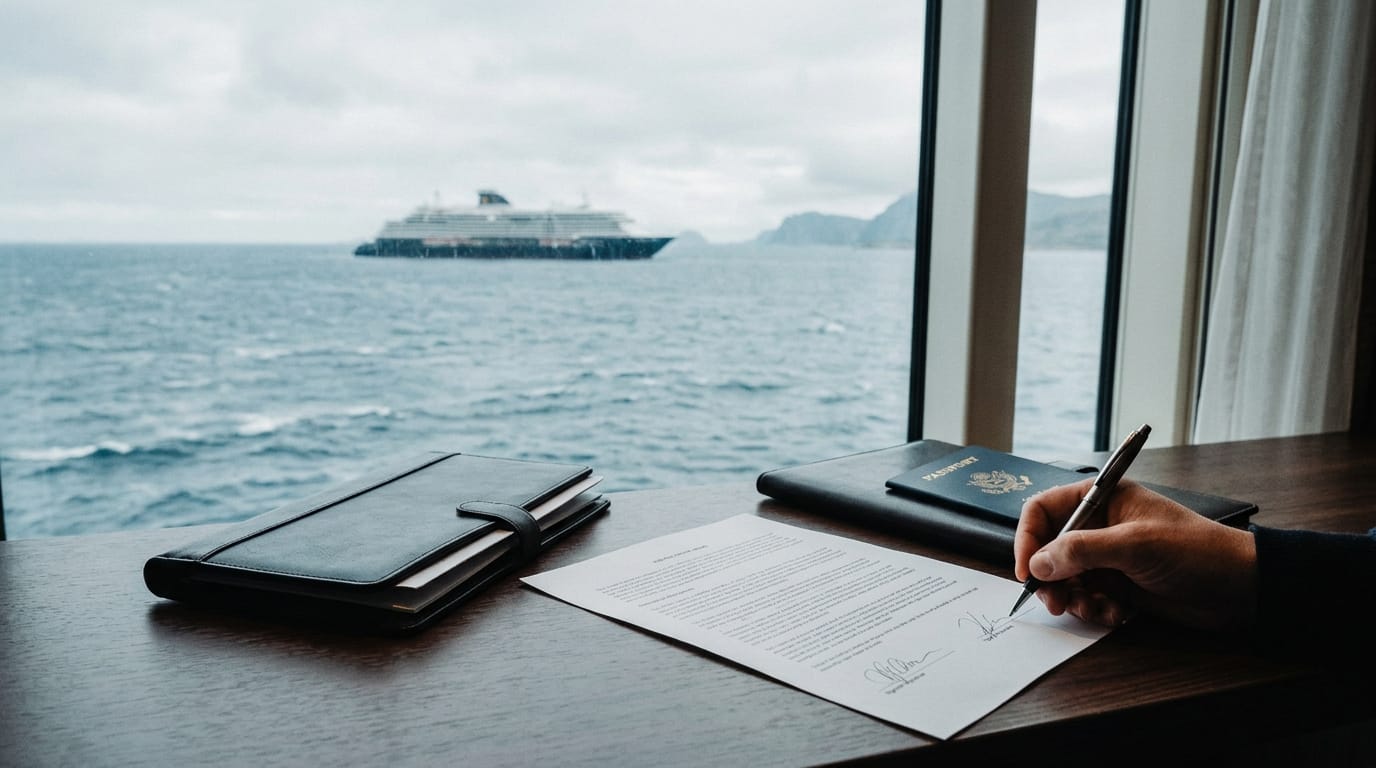
For a long voyage, organizing paperwork in one small folder can make it easier to find what you need. Along with cruise documents, keep required entry paperwork accessible. Requirements depend on your passport and the countries on your route.
It's also useful to have the cruise line's emergency contact details and your insurance information with you during your journey to the ship. Keep digital copies available offline and store copies separately from the originals.
Boarding the Ship and Finding Your Bearings
Once you're aboard, give yourself permission to take the afternoon at an easy pace. You don't need to learn the layout or make every decision before departure.
Start with the places you'll use soon: your cabin, a place to sit, and a dining venue. If you're traveling with someone, agree on a meeting point in case you take different routes around the ship.
Pay attention to the ship's safety information and crew instructions. Knowing where to find your assembly station is part of getting comfortable onboard.
You may also receive information about the voyage's daily program and services. Keep it handy, but don't feel obliged to attend every activity. After flights and a terminal transfer, a quiet lunch or a short rest can be a welcome start.
Your first afternoon is a chance to get oriented, not a deadline for arranging every detail of a months-long trip.
Settling Into Your Cabin
Your cabin has a bigger job on a full world voyage than it does on a one-week sailing. A few thoughtful choices can make it easier to live in the space as the itinerary and weather change.
Give everyday items an easy-to-reach home
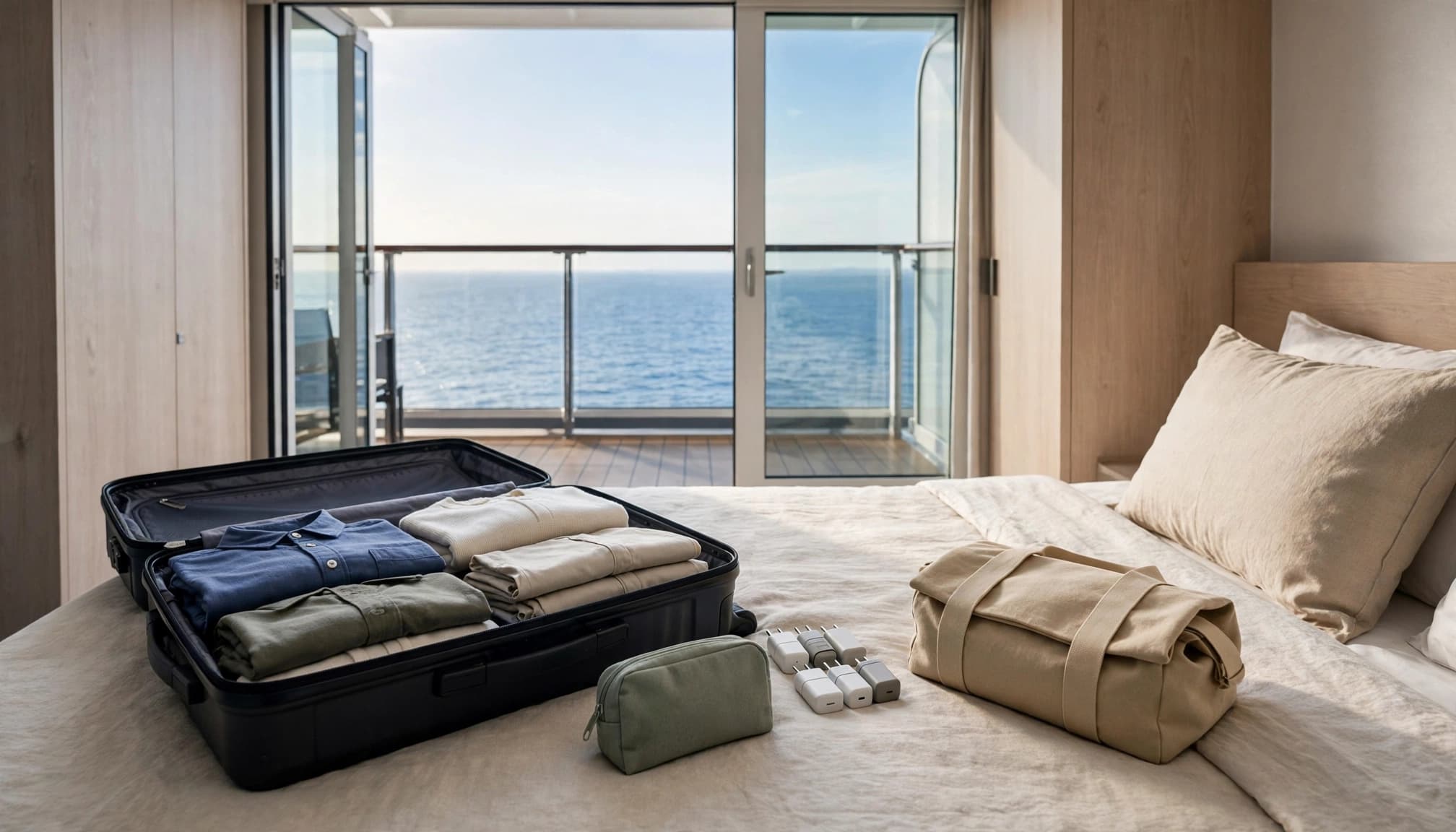
Put the things you'll use most often where you can find them without unpacking everything again. That might mean keeping chargers near a suitable outlet, toiletries together in the bathroom, and walking shoes near the door.
Unpack for the first part of the voyage before organizing clothing for later climates. Warm layers can be less accessible while you're sailing through the tropics, for example. Keep walkways clear and avoid filling every drawer immediately. You'll appreciate having some room for purchases or items you acquire along the way.
Set up storage around your routine
Cabin storage varies by ship and room category. Fold or hang clothes in a way that makes sense for your day, rather than trying to recreate your closet at home.
A laundry bag can keep worn clothes separate, while packing cubes may help group smaller items. Leave bulky organizers at home if they'll take up space you need for moving around. Once you've unpacked, put suitcases out of the way wherever your cabin allows.
Organize Supplies for the Full Voyage
A long itinerary changes how you think about everyday necessities. You can pack flexible clothing and plan to do laundry, but personal health supplies deserve a separate plan.
Keep medication accessible
Bring your prescription medication in your carry-on, together with copies of prescriptions and relevant medical information. Arrange the quantity and any extra supply for delays with your healthcare professional before you travel.
Storage matters too. If medication needs refrigeration or you use medical equipment, those arrangements belong in your pre-voyage planning. Our guide to medication planning for a long cruise covers the considerations.
Keep spare glasses and essential health supplies somewhere accessible in your cabin. You'll know where to find them without searching through every bag.
Make room for personal comforts
Bring the toiletries you prefer, especially products that may be difficult to replace. Leakproof containers help protect clothing, and a small pouch keeps bottles together.
A compact charger, suitable adapters, an eye mask, or earplugs may also make the cabin more comfortable. Pack for your own habits rather than buying every travel accessory you see.
Laundry is another part of the plan. Ships and fares differ, so the options may influence how much clothing you bring. Coordinated layers and washable basics can reduce the amount you need to store.
Meeting Other Full-Voyage Guests
One of the pleasures of joining a full voyage is having time to get to know people. You may meet fellow travelers over lunch, in a lounge, or during an onboard activity. Some guests may be sailing the entire itinerary, while others have booked a shorter segment.
There's no need to find your social circle on the first day. A friendly conversation about where someone's joining the ship or which ports they're looking forward to can be an easy starting point.
If your sailing offers gatherings for full-voyage guests, they can be a way to meet others who'll share much of the route. The availability of events and any full-voyage benefits varies by cruise line and sailing.
The difference between a full voyage and a segment also matters when you're considering a booking. The full itinerary gives you more time to settle into the ship and its routines.
Getting Ready for Your First Evening
By evening, you've traveled to the port, joined the ship, and begun settling in. Keep your plans comfortable, particularly if you've crossed time zones or arrived after a long flight.
Choose an easy dinner plan
A relaxed first dinner gives you a chance to enjoy the ship without turning the evening into another logistical task. Dining arrangements and dress expectations vary, so the first-night experience won't look the same on every voyage.
Having an outfit in your carry-on gives you a simple option. Comfortable shoes and a light layer can also help if you want to walk around the ship or spend time outside.
If you've brought a favorite evening outfit, there will be plenty of opportunities to wear it during the voyage. You don't have to make the first night the most elaborate.
Leave space to rest
Unpacking every item can wait. Set out what you'll need the next morning, charge your phone, and give yourself time to settle.
You may want to call family or send a short message before bed. Then take a moment to enjoy the fact that the trip you've planned is underway. A good night's rest can make the next day feel much more enjoyable.
Prepare for the Itinerary at a Comfortable Pace
A full world voyage can include many destinations and stretches at sea. You don't need to solve the entire itinerary on embarkation day, but it helps to have important information in one place.
Keep your itinerary, insurance details, emergency contacts, and copies of entry documents accessible. Store digital copies securely and keep printed copies separate from the originals. If plans change, you'll have your information together.
As the voyage begins, leave room for a mix of active port days and quieter days onboard. A long trip offers time to develop routines that suit you. It also gives you permission to skip an activity when you'd rather rest.
For more planning ideas before you book, you can Subscribe to Our YouTube Channel, where we share guidance about world cruises, ships, and itineraries.
Start Your Voyage With Room to Settle In
Embarkation day is the beginning of a long stay, not a test of how quickly you can get organized. Keep your essentials close, plan a comfortable arrival, and take the first afternoon one step at a time.
The best preparation gives you flexibility once you're onboard. You can settle into your cabin, meet fellow guests, and find your own rhythm as the voyage unfolds.
If you're considering a full voyage, Schedule a Consultation with us to discuss the itinerary and ship that fit your plans.
Recent Posts