

Cruise Ship Luggage on a 100-Day Voyage: What Happens?
Your suitcase may travel with you for 100 days, yet you probably won't handle it much after boarding. The important moments for cruise ship luggage are the handoffs: at the terminal, when you settle into your cabin, and when you leave the ship.
If you're considering a world cruise, knowing what to keep close can make those handoffs less stressful. Procedures vary by cruise line, ship, port, and itinerary, so use your sailing instructions for the final details.
Key Takeaways
- Checked bags and carry-ons have different jobs. Keep documents, medication, valuables, and first-day essentials with you.
- Your cabin is usually where your suitcases stay during the voyage. Check its storage layout before deciding how much to bring.
- Plan for a possible gap between handing over checked bags and seeing them again, both when boarding and when leaving.
- Confirm baggage limits, tags, prohibited items, delivery arrangements, and disembarkation instructions for your specific sailing.
How cruise ship luggage gets from the terminal to your cabin
The check-in handoff
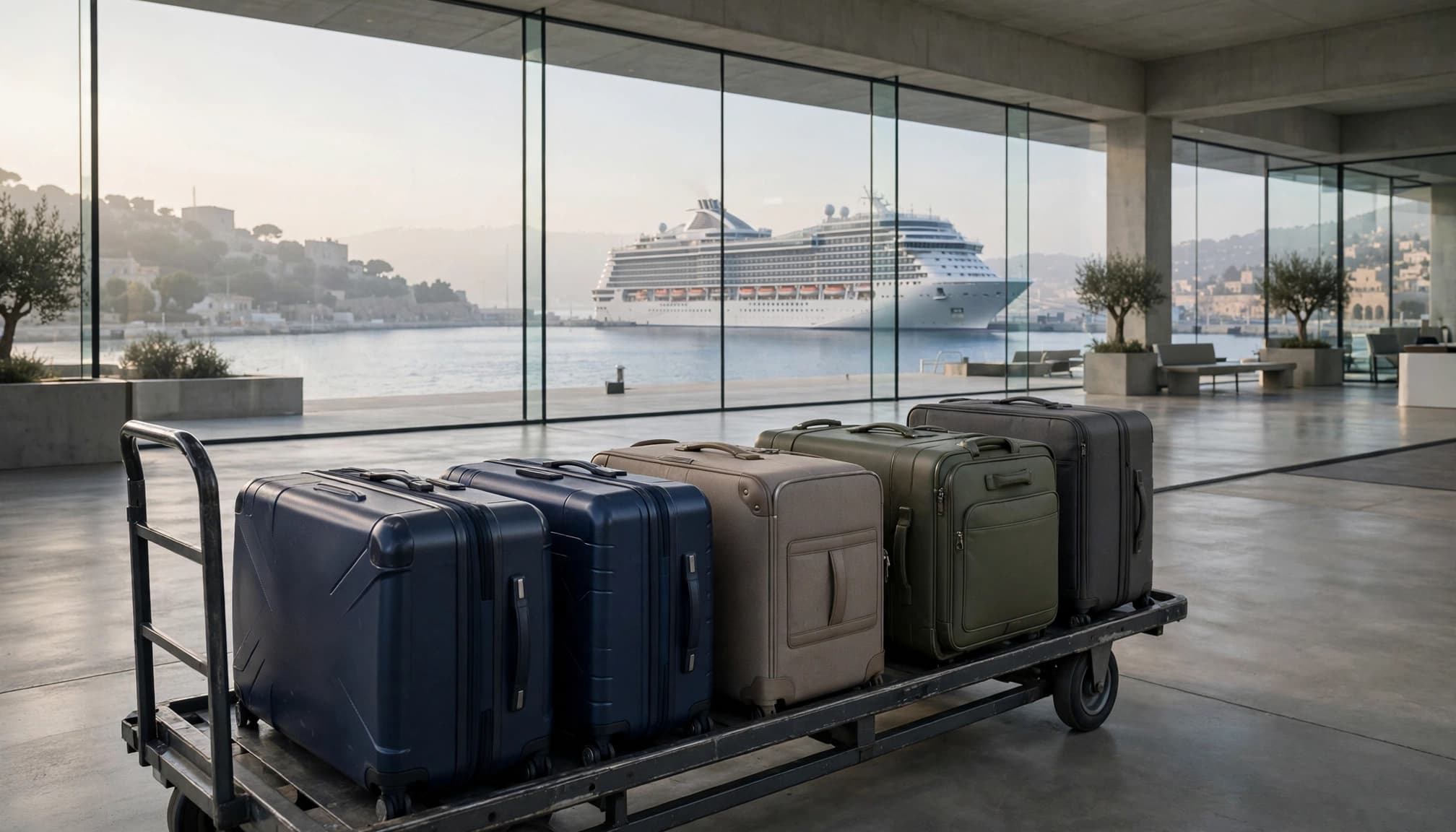
If your sailing offers terminal baggage drop-off, you'll follow its instructions for where and when to hand over checked suitcases. Complete any luggage tags the line provides before you arrive, and keep your boarding documents accessible rather than inside a suitcase.
After handoff, port and ship personnel handle the bags according to that sailing's procedures. You won't normally travel alongside your checked luggage, so anything you need while boarding belongs in a carry-on. Baggage handling arrangements can differ between ports, even on the same itinerary.
When your bags reach the cabin
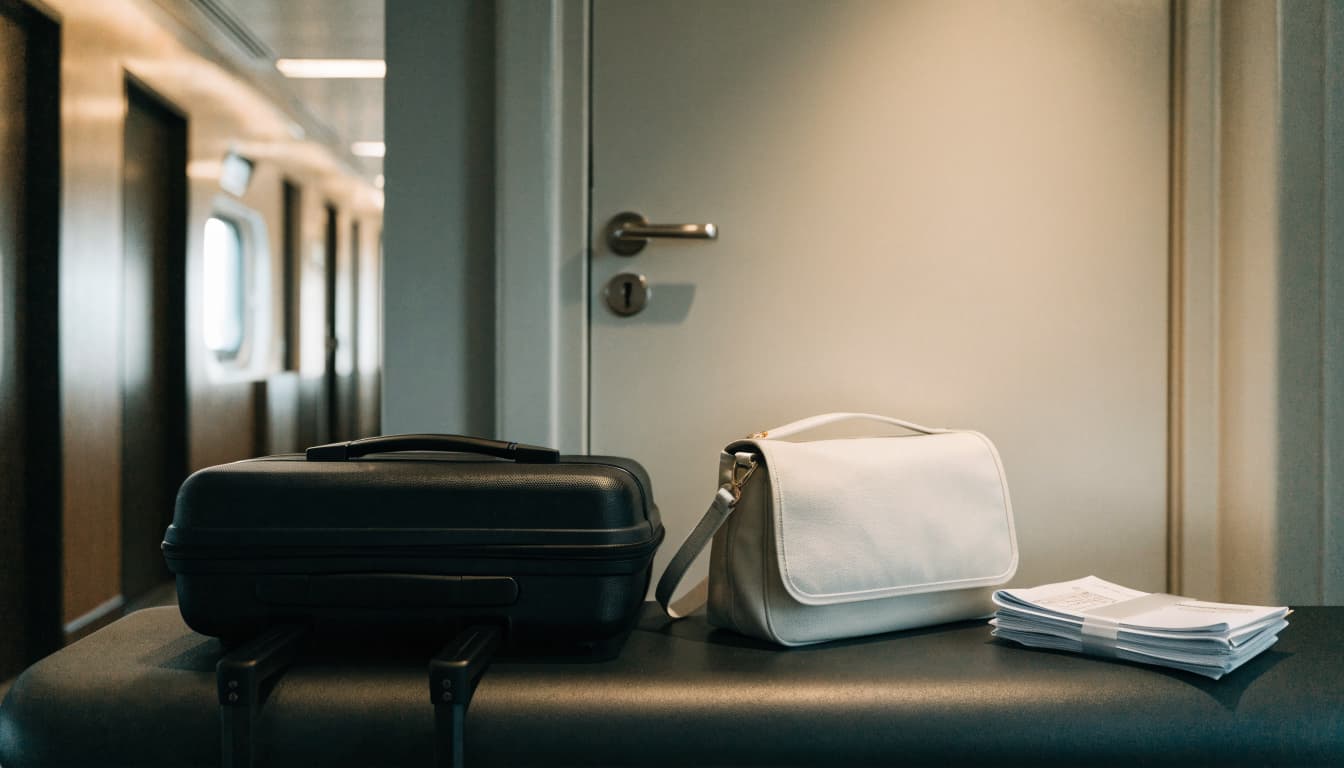
Don't assume your checked suitcases will be waiting when you're allowed into your room. On a busy boarding day, cabin access and baggage delivery may happen at different times. The useful plan is simple: carry what you'll need through the afternoon and your first evening.
Once your bags arrive, check that each one is yours and that nothing appears damaged. If a suitcase is missing, contact the ship's guest services team promptly with its description and tag details. A photograph taken before you handed it over can make that conversation easier.
What belongs in your boarding-day carry-on?
Essentials you can't wait for
Your carry-on stays with you, subject to the line's boarding rules and any airline limits on your journey to port. It should cover a delayed suitcase without becoming difficult to carry around the terminal or ship.
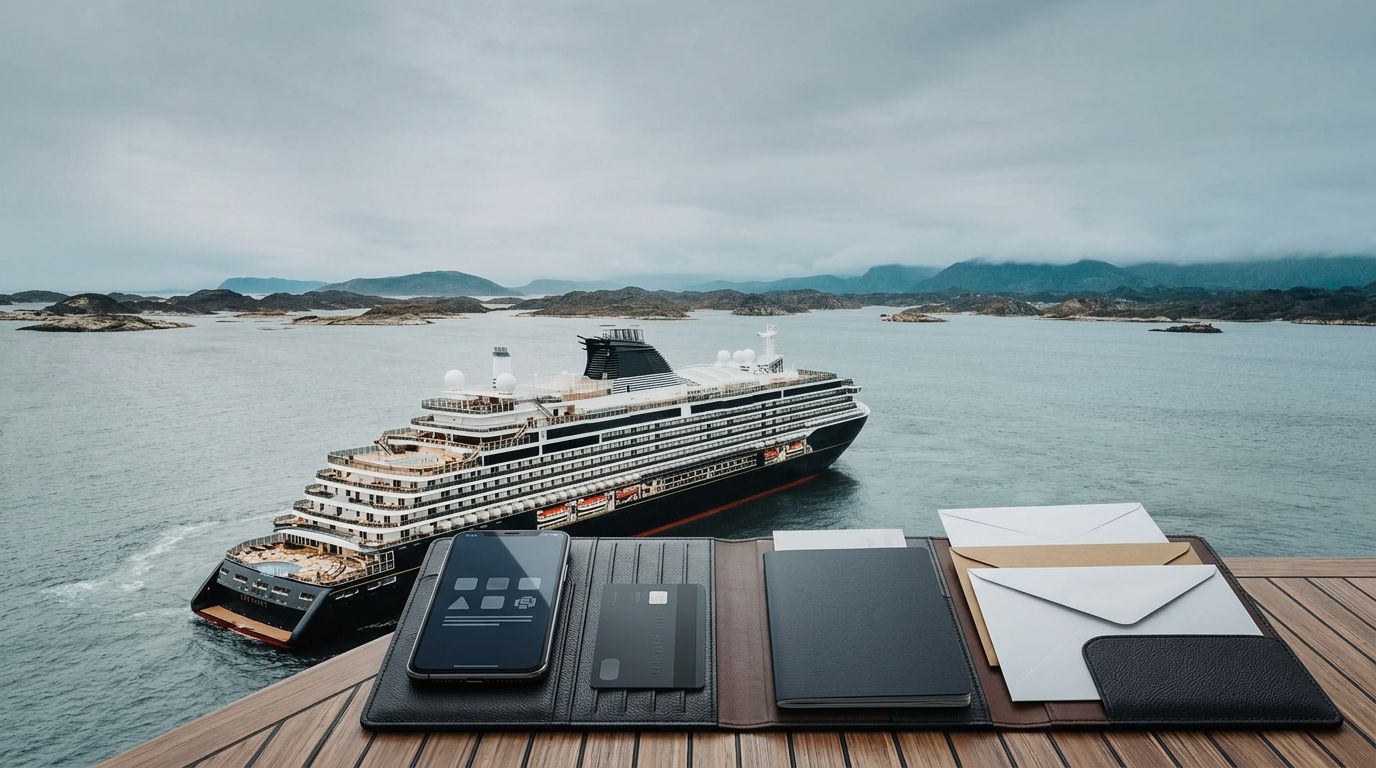
Keep your passport, required travel documents, wallet, glasses, chargers, essential health supplies, and a change of clothes close. Add underwear and anything you need for your first night. If you expect to use the pool before your suitcase arrives, pack swimwear where you can reach it.
Medication and valuables
Carry prescription medication in its original labeled packaging, along with any documentation your itinerary requires. Discuss the supply you'll need for the full voyage, including a suitable reserve, with your clinician and pharmacy before departure. Don't count on finding your usual prescription at the next port.
Keep jewelry, fragile electronics, and other hard-to-replace items with you as well. For medication that needs refrigeration or medical equipment that needs approval, ask the cruise line about arrangements before you sail. Keep written confirmation with your travel records, not in checked baggage.
Where do your suitcases stay for 100 days?
Cabin storage is the starting point
After arrival, most travelers unpack and keep their empty suitcases in the cabin. Whether they fit under the bed, in a closet, or elsewhere depends on the actual room. Don't count on separate shipboard storage unless your cruise line confirms it's available.
Look beyond the cabin's advertised floor area. Ask about hanging space, drawers, shelves, and under-bed clearance for your exact ship and cabin category. If two people are sharing, check whether both will have usable storage. A room that looks generous in photographs may have less practical space than expected.
An unpacking routine that lasts
Put everyday clothes within easy reach. Store formalwear separately, and move cold-weather layers farther back until your route calls for them. Packing cubes can keep categories together, but they shouldn't make drawers hard to close.
Leave walkways, vents, and doors clear. If your empty cases don't fit where you expected, ask your cabin team about options rather than assuming there's a luggage room. Storage arrangements vary , even between cabin categories on the same ship.
Pack for the route, not for 100 separate days
Let laundry set your clothing count
A 100-day itinerary can bring humid ports, cool sea days, rain, and different dinner dress codes. Bringing a fresh outfit for every day would overwhelm most cabins. Build around clothes that combine easily, then check how you'll wash them.
Your ship may offer self-service laundry, paid laundry, a package, or another arrangement. Check what's available on your sailing and what it costs. Enough everyday clothing for roughly seven to ten days can be a useful starting point if laundry is accessible, but adjust for your habits and the service you choose.
Give bulky items a reason to travel
A light rain shell, washable layers, comfortable walking shoes, and an evening outfit you can wear more than once often earn their space. Check the actual route and the line's dress guidance before adding clothes for activities you haven't booked.
Leave capacity for items acquired during the voyage. If you're flying to or from the ship, compare the airline's baggage rules with the cruise line's. An allowance that works for boarding the ship may still be costly or impractical at the airport.
Label bags so they can be identified
Attach the tags required for your sailing, then add a durable personal luggage tag to each checked bag. Place a second identification card inside. Include a name and contact number, but avoid displaying more personal information than necessary on the outside.
Photograph each closed suitcase before you hand it over. The image can show its color, size, and distinctive features if you need to report a delay or damage. Keep a record of what's in each bag, especially items you would need to replace.
Before departure, review the line's current rules for baggage limits and prohibited items. Electrical equipment, alcohol, and other restricted belongings need particular attention. Check airline rules separately, including restrictions that apply to carry-ons.
Do your bags move at every port?
On a continuous voyage where you remain in the same cabin, your unpacked belongings generally stay there while you go ashore. You carry only what you need for the day. Check each destination's document guidance before leaving the ship, and secure valuables in line with your cabin's arrangements.
A long trip isn't always one continuous cabin booking. If you've joined consecutive segments, are changing cabins, or plan to leave and rejoin the ship, ask the line how baggage and transfers will work. Don't assume a move between cabins happens without your involvement.
What happens to luggage when the voyage ends?
Preparing for the final night
Disembarkation instructions should tell you whether you can have checked bags collected before departure morning. If your sailing uses that arrangement, you'll usually need to pack them by a stated deadline and keep your overnight necessities in a separate bag. Follow the instructions given onboard rather than a schedule from another cruise.
Before closing each case, check drawers, shelves, the safe, and charging outlets. Put passports, medication, glasses, valuables, and clothes for the journey home into your carry-on. Keep anything needed before your bags are returned out of the checked cases.
Leaving the ship and finding your bags
Your assigned departure arrangements determine when you leave and where you collect any bags the ship has handled. Allow time for terminal procedures and onward travel. If you prefer to carry every bag yourself, ask whether your sailing offers that choice and whether you can manage the bags without assistance.
Before leaving the baggage collection area, check that you've taken the right cases. Then review the rules for your next flight or transfer. After 100 days, souvenirs and purchases can change both your suitcase weight and the number of bags you need to move.
Questions to settle before you sail
Ask for the baggage instructions that apply to your specific ship and departure port . Confirm when and where checked bags are accepted, how to complete the line's tags, what you may carry onboard, and which items are prohibited. Also ask what to do if a bag doesn't reach your cabin.
For a long voyage, pair those answers with a look at your cabin floor plan and laundry options. If you're weighing cabins or consecutive segments, Schedule a Consultation to discuss how storage and baggage arrangements fit your travel plans. The cruise line can then confirm the rules for your booking.
Frequently Asked Questions
Can I keep my suitcase with me when boarding?
You can generally bring a manageable carry-on, subject to your line's rules. Larger bags may need to follow its checked-baggage process. Confirm size restrictions and any items that must remain with you before travel.
Will the ship store my empty suitcases?
Plan on keeping them in your cabin unless the cruise line confirms another option. Ask about under-bed clearance or closet space for your exact cabin rather than relying on a photograph of a different room.
What if my checked bag arrives late?
Your carry-on should cover your immediate needs while you ask guest services for help. Provide the bag's description, a photograph, and any tag details you have. Keep medication and essential documents with you from the start.
The easiest luggage plan for a long voyage
The goal isn't to bring everything you might use in 100 days. It's to know which bag holds your essentials, where your suitcases will fit, and how laundry will support your wardrobe.
That preparation makes the handoffs at boarding and disembarkation easier. In between, your luggage can spend most of the voyage unpacked while you enjoy traveling without repeatedly packing up your room.
Recent Posts